Showing posts with label socialism. Show all posts

Sunday, May 16, 2010

The Legacy of Gordon Brown's, and Perhaps, Obama's Socialism??

http://www.timesonline.co.uk/tol/news/politics/article7127819.ece

Labour hid ‘scorched earth’ debts worth billions


By Marie Woolf and Jonathan Oliver


UK Sunday Times

May 16, 2010

THE government last night accused Labour of pursuing a “scorched earth policy” before the general election, leaving behind billions of pounds of previously hidden spending commitments.

The newly discovered Whitehall “black holes” could force even more severe public spending cuts, or higher tax rises, ministers fear.

Vince Cable, the business secretary, said: “I fear that a lot of bad news about the public finances has been hidden and stored up for the new government. The skeletons are starting to fall out of the cupboard.”

The new cabinet has been discovering previously unknown contracts and uncosted spending commitments left by their spendthrift predecessors.

“There are some worrying early signs that numbers left by the outgoing government may not add up,” said Francis Maude, the Cabinet Office minister.

David Willetts, the universities minister, claimed that Labour had left behind “not so much an in-tray as a minefield”.

Billions of pounds in public money was committed in the run-up to the election campaign in a deliberate strategy to boost Labour’s chances at the ballot box and sabotage the next government.


One former Labour minister told The Sunday Times: “There was collusion between ministers and civil servants to get as many contracts signed off as possible before the election was called.”

One former adviser to the schools department said there was a deliberate policy of “scorched earth”. “The atmosphere was ‘pull up all the railways, burn the grain stores, leave nothing for the Tories’,” he added.


The disclosures come as George Osborne, the chancellor, prepares this week to reveal details of an initial £6 billion of cuts to help plug the hole in the £163 billion deficit. A full emergency budget next month will see some departmental budgets being slashed by up to 25% as well as tax rises, including a possible hike in Vat.


Many ministers are spending this weekend going through their red boxes trying to understand the scale of the budgetary black holes facing their departments.


This week the government is expected to call a temporary halt to recently signed IT contracts, while new public sector construction projects will be reviewed.

The “black holes” that ministers have already unearthed include:

- A series of defence contracts signed shortly before the election, including a £13 billion tanker aircraft programme whose cost has “astonished and baffled” ministers.

- £420m of school building contracts, many targeting Labour marginals, signed off by Ed Balls, the former schools secretary, weeks before the general election was called.

- The troubled £1.2 billion “e-borders” IT project for the immigration service, which, sources say, is running even later and more over-budget than Labour ministers had admitted.

- A crisis in the student loans company where extra cash may be needed to prevent a repeat of last year’s failure to process tens of thousands of claims on time.

- The multi-billion-pound cost of decommissioning old nuclear power plants, which ministers claim has not been properly accounted for in Whitehall budgets.
- A £600m computer contract for the new personal pensions account scheme rushed through by Labour this year, which will still cost at least £25m even if it is cancelled.

Maude, who has been given the task of reducing Whitehall waste, insisted that ministers were not scaremongering to paint their predecessors in a negative light. He said there was widespread concern that Labour had become particularly spendthrift in the run-up to the election campaign.

“We put the last government on notice that contracts should not be signed without specific ministerial direction,” he said. “We are now seeking to find out what has been committed in the last few months.”


He hinted that the hidden “poison pills” could force the government to look at even more dramatic spending cuts than the ones already being envisaged. “It certainly doesn’t make the task of reducing the structural deficit any easier,” Maude said.

Willetts revealed that while Lord Mandelson, whose portfolio covered business, innovation and skills, had recently announced large cuts in the universities budget, little work had been done to plan exactly where the axe might fall.


“The outgoing Labour government left not so much an in-tray as a minefield,” Willetts said. “Issues that were left behind as too difficult to tackle by the previous regime are going to have to be dealt with.”


Gerald Howarth, the new Tory minister for defence procurement, disclosed that the financial pressures on the Ministry of Defence (MoD) were even graver than he had been expecting. “The appetite for new programmes exceeded the capacity of the MoD’s stomach, particularly in the run-up to the election,” he said. “In the past few months there was a rush of new orders. What we are going to have to do is ensure the equipment programme matches the military need.”

Defence sources say the military has been using the urgent operational requirement (UOR) to borrow money from the Treasury to fund equipment for Afghanistan that the MoD could not afford to buy. “They’ve been using the UOR system like a credit card,” one source said, “and they’ve been maxing out on the card to the point where they’re around £700m over the limit. It’s all got to be paid back.”

Osborne’s cuts package to be announced early this week includes a freezing of spending on new IT projects, stopping most public sector recruitment and renegotiating deals with government suppliers.


With speculation growing that Osborne is planning to announce an increase in Vat from 17.5% to 20% next month, there are growing fears he could face a tax revolt from left-leaning Lib Dem backbenchers.


Lib Dem MP Simon Hughes said on Radio 4’s Today programme yesterday: “Our party remains an independent party. We will take views. We don’t suddenly change our policy.”

[WILL OBAMA & THE DEMOCRATIC PARTY DO THE SAME TO AMERICA???]


Thursday, August 14, 2008

Charting The Evolution of the Berlin-Paris-Brussels 'Homo Bureaucrat Federalis'

[The following article appears within the June-July 2008 issue of Air Berlin Magazine. It illuminates in a mocking tone just how serious an infringement the bureaucratic machinery within Germany, and by extension, within the EU at large, poses to the individual rights, especially private property rights, of all European citizens. If the Majority within the 110th (and soon-to-be 111th) US Congress believes that Americans will tolerate this type of over-regulation, they will be in for a rude awakening this coming November 2008.]


The following image depicts a flow chart of the evolution of the European Community Bureaucrat

[The following article provides but one example in Germany of this phenomenon.]


http://boote-forum.de/attachment.php?attachmentid=93743&d=1216819903


Source: Air Berlin Magazine


JunilJuli 2008 (June-July 2008)


(PubEshcr : Aw Bcrhn PLC & Co. Luftverkekhrs KG)


Wenn der Staat seine Muskeln spielen lasst (When the State Lets Its Muscles Flex)

Original German By Peter Westen


English Translation by Rudolf Fultusa


Just a short while ago I reported on this page from my little world which is situated quite modestly on the green beach of the Spree. There where once upon a time the legendary Captain of Koepenick made the bureaucrats stand at attention. In the meantime the bureaucrats again have everything under control—foremost its citizens. My most recent adventure proves it. Peter Westen


Property obligates. Therefore the owners of water properties are responsible for proper shoreline stabilization (bank reinforcement) under penalty of law. Because our posts were silently rotting away, I—dutifully-- applied for a permit to renew them at the Office for the Environment and Nature in the Fall of the past year. At the same time, I confronted the agency with the suggestion to build a boat pier. One like our neighbors have already had for a long time.


For this purpose applications and construction plans had to be prepared, the latter by a professional, and submitted along with six copies. Once this had been done, nothing occurred for a long time. At the beginning of February, my wife became nervous. She feared that our garden would be laid waste, if the construction work did not begin before the green phase. Therefore I called the official in charge at city hall and enquired shyly about the status of the proceedings. It is in full progress was the answer. The approval of the participating offices was, however, still missing. Nevertheless, a few days later a contract with which the “compensation for a marine construction installation under the law of fishing rights” was regulated. Although we had not applied for a fishing license, we were obliged by the authorities to pay a yet undetermined sum to the fishing club.


Five months of official hibernation were too few to process an application


At the end of February came –in response to a payment of 140 Euros—the permit for the renewal of the stabilization of the shoreline ( i.e. the embankment). And after a half a dozen additional reminder calls, also the one for the boat pier. Along with the 127.82 Euro charge there was an additional “equalization impost” of 426 Euros for “ new planting of reeds at the favorable places “ was levied. Even though there never had been any reeds on our shoreline. From the long list of requirements, we were able to extract that the boat pier could only be 99centimeters wide, not 1.2 meters. The functionaries must have fiddled around with this measurement for quite a long time! Unfortunately, I did not pay the requisite attention to the passage under § 7, point 1 namely: “The obligation to obtain any other permits is not addressed via this permit.” That was about to avenge itself by return mail.


Scarcely had the company tasked by us removed the rotten posts, and the water protection police showed up. A person in uniform abrasively demanded the presentation of the permit. Once my wife had handed it to him, he humiliated her with: “This paper proves absolutely nothing. Without authorization from the Federal Water and Navigation Administration, you are not permitted to do anything here.” Shortly thereafter an official of the Erkner branch proclaimed in a royal fashion: “I decree an immediate cessation of construction!” Since Koepenick had already forwarded the application to his office five months ago, I was able to persuade him to conduct a site inspection on the following day.
How an Official became a Person with the Right to Educate
On site the man exuded generosity: “There is no reason not to approve your application.” However, he relegated my assumption that we were now allowed to continue to build into the realm of fables: “You must wait for the written permission. If processed quickly it can take three to four weeks. This is quite necessary for educational reasons.” Aha. The young man was my “in loco parentis!” Still on the same day, I telephoned at the Ministry of Transportation and complained about so much arrogance. Five days later I was allowed to collect the paper. This did not prevent an officer of the Water Protection Police in a fit of official presumptuousness to shut down the construction site once more for a short time, because the “official document” was not presented to him. Now, however, I am afraid that Koepenick could be everywhere in our country. Daily

-------------------------------------------------------------------------------------------------
Original German:


Erst kürzlich hatte ich Ihnen an dieser Stelle aus meiner kleinen Welt berichtet, die ziemlich beschaulich am grünen Strand der Spree liegt. Dort, wo einst der legendäre Hauptmann von Köpenick die Beamten im Rathaus strammstehen ließ. Inzwischen haben die Beamten wieder alles fest im Griff – vor allem die Bürger. Mein jüngstes Abenteuer beweist das. Von Peter Westen


Eigentum verpflichtet. Deshalb sind die Besitzer von Wassergrundstücken unter Strafandrohung gehalten, für eine ordentliche Uferbefestigung zu sorgen. Weil unsere Pfähle bereits still vor sich hin faulten, reichte ich – pflichtgemäß – im Herbst vergangenen Jahres beim Amt für Umwelt und Natur den Antrag auf Genehmigung der Erneuerung ein. Gleichzeitig konfrontierte ich die Behörde mit dem Ansinnen, einen Bootssteg bauen zu dürfen. So einen, wie unsere Nachbarn ihn schon lange haben. Dafür mussten Anträge und Baupläne, Letztere von einem Projektanten
erstellt, in siebenfacher Ausfertigung eingereicht werden. Nachdem dies geschehen war, passierte zunächst einmal lange Zeit nichts. Anfang Februar wurde meine Frau unruhig. Sie befürchtete, dass unser Garten verwüstet würde, wenn die Bauarbeiten nicht vor Beginn der Grünphase begännen. Also rief ich die zuständige Sachbearbeiterin im Rathaus an und erkundigte mich schüchtern nach dem Stand des Verfahrens. Das sei in vollem Gange, lautete die Auskunft. Noch fehlten jedoch die Zustimmungen der beteiligten Instanzen. Immerhin erreichte uns wenige Tage später ein Vertrag, mit dem die „fischereirechtliche Entschädigung für eine wasserbauliche Anlage“ geregelt wurde. Zwar hatten wir keinen Angelschein beantragt, doch verpflichtete man uns von Amts wegen, eine noch unbestimmte Summe an den ischerverein zu entrichten.


Fünf Monate behördlicher Winterschlaf waren zu wenig, um einen Antrag zu bearbeiten


Ende Februar kam – gegen Zahlung von 140 Euro – schließlich die Genehmigung zur Erneuerung der Uferbefestigung. Und nach einem halben Dutzend weiterer Mahnanrufe Anfang April endlich auch die für den Bootssteg. Neben 127,82 Euro Gebühr wurde darin auch noch eine „Ausgleichsabgabe“ von 426 Euro für die „Neuanpflanzung von Röhricht an geeigneter Stelle“ erhoben. Obwohl es an unserem Ufer nie Röhricht gab. Der langen Liste von Auflagen konnten
wir dann entnehmen, dass der Bootssteg nicht 1,20 Meter, sondern nur 99 Zentimeter breit sein dürfe. An diesem Maß müssen die Beamten wohl lange getüftelt haben! Leider schenkte ich dem Passus unter § 7, Punkt 1 nicht die gebührende Aufmerksamkeit. Der lautete nämlich: „Durch die Genehmigung wird die Verpflichtung zur Einholung etwa sonst erforderlicher behördlicher Zulassungen nicht berührt.“ Das sollte sich postwendend rächen.


Kaum hatte die von uns beauftragte Firma die morschen Pfähle entfernt, erschien die Wasserschutzpolizei. Ein Uniformierter verlangte harsch nach Vorlage der Genehmigung. Als meine Frau ihm die gereicht hatte, beschied er sie: „Dieses Papier besagt gar nichts. Ohne Genehmigung der Wasser- und Schifffahrtsverwaltung des Bundes dürfen Sie hier nichts machen.“ Kurz darauf verkündete ein Beamter der Außenstelle Erkner hoheitlich: „Ich verfüge einen sofortigen Baustopp!“ Da Köpenick den Antrag bereits fünf Monate zuvor an seine Dienststelle weitergeleitet hatte, konnte ich ihn überreden, schon am folgenden Tag eine Ortsbesichtigung vorzunehmen.
Wie ein Beamter zum Erziehungsberechtigten wurde

Vor Ort gab sich der Mann generös: „Es gibt keinen Grund, Ihren Antrag nicht zu genehmigen.“ Meine Annahme, dass wir nun weiterbauen dürften, verwies er jedoch ins Reich der Fabel: „Sie müssen auf die schriftliche Genehmigung warten. Das kann bei schneller Bearbeitung drei bis vier Wochen dauern. Das ist schon aus erzieherischen Gründen erforderlich.“ Aha. Der junge Mann war also mein Erziehungsberechtigter! Noch am selben Tag rief ich im Verkehrsministerium an und beschwerte mich über so viel Arroganz. Fünf Tage später durfte ich das Papier abholen. Einen Beamten der Wasserschutzpolizei hinderte das nicht daran, die Baustelle in einem Anfall von Amtsanmaßung noch einmal kurzfristig stillzulegen, weil ihm die „Urkunde“ nicht vorlag. Ich befürchte nun allerdings, dass Köpenick überall in unserem Land sein könnte. Tagtäglich.

Sunday, May 4, 2008

European Dream Only a Fantasy, as Europeans' Quality of Life Falls Precipitously

http://www.nytimes.com/2008/05/01/business/worldbusiness/01middle.html?partner=rssnyt&emc=rss


For Europe’s Middle-Class, Stagnant Wages Stunt Lifestyle


By CARTER DOUGHERTY and KATRIN BENNHOLD


New York Times


May 1, 2008


LES ULIS, France — When their local bakery in this town south of Paris raised the price of a baguette for the third time in six months, Anne-Laure Renard and Guy Talpot bought a bread maker. When gasoline became their biggest single expense, they sold one of their two cars.


Their combined annual income of 40,000 euros, about $62,500, lands Ms. Renard, a teacher, and Mr. Talpot, a postal worker, smack in the middle of France’s middle class. And over the last year, prices in France have risen four times as fast as their salaries.


At the end of every month, they blow past their bank account’s $900 overdraft limit, plunging themselves deeper into a spiral of greater resourcefulness and regret.


“In France, when you can’t afford a baguette anymore, you know you’re in trouble,” Ms. Renard said one recent evening in her kitchen, as her partner measured powdered milk for their 13-month-old son, Vincent. “The French Revolution started with bread riots.”


The European dream is under assault, as the wave of inflation sweeping the globe mixes with this continent’s long-stagnant wages. Families that once enjoyed Europe’s vaunted quality of life are pinching pennies to buy necessities, and cutting back on extras like movies and vacations abroad.


[THE EUROPEAN DREAM WAS AT BEST A FANTASY, AT WORST, AN OUTRIGHT LIE]


Potentially more disturbing — especially to the political and social order — are the millions across the continent grappling with the realization that they may have lives worse, not better, than their parents.


“I have this feeling that there is a wall in front of us,” said Axel Marceau, a 41-year-old schoolteacher living outside of Frankfurt. “We’re just not going to get any further.”


His concerns are well-founded. A study by the German Institute for Economic Research in Berlin found that the broad middle of the German work force, defined as workers making from 70 to 150 percent of the median income, shrunk to 54 percent of the population last year, from 62 percent in 2000.


Mr. Marceau’s father had a teaching job that afforded the family upward mobility, from owning a home to fancy ski vacations. But today, Mr. Marceau said, a new class of bankers, executives and other high earners has taken over. “I feel like we’ve been in a slow process of losing to the people up top,” he said.


“No one thought during the 1980s that they could possibly belong to a group of people who slide down the social scale,” said Markus Grabka, an economist at the institute for economic research. “No one had existential angst of the sort you have today.”


To be sure, Europe’s middle class is still larger than the number of people at risk of falling into poverty — and, by many measures, more protected than the American middle class. But policy makers worry that could change as the European economy starts to feel the drag of an American slowdown and high inflation.


[OF COURSE, EUROPEANS BLAME THE AMERICANS FOR THEIR OWN POLICY FAILINGS]


“The problem,” said Julián Cubero, chief economist for Spain for BBVA, a leading Spanish bank, “is that if your salary rises more slowly than the cost of products you buy on a daily basis, you feel poorer every day.”


That simmering concern turned into anger last week in Britain. Striking teachers closed schools for the first time in two decades, protesting pay packages that did not keep pace with the soaring cost of living. Proposed raises were about 2.5 percent, while food has risen 7 percent and oil costs have surged 20 percent in Britain since this time last year.


The teachers’ rallying cry was just the latest to echo across the Continent.


German workers from several industries waged a series of strikes last month demanding a greater piece of the economic pie after years of being asked to make salary concessions — flexibility that, some economists argue, has helped a leaner, meaner Europe stave off recession so far.


In France, where purchasing power has replaced unemployment as Public Enemy No. 1, unions representing workers from teachers to factory workers have taken to the streets in protest.


This month, thousands of European workers converged on the capital of Slovenia, which currently holds the European Union’s rotating presidency.


[PERHAPS, THESE WORKERS SHOULD RELY LESS ON SO-CALLED UNION BENEFITS, AND CONCENTRATE MORE ON SELF-HELP. RELIANCE ON OTHERS BREEDS RENT-SEEKING AND LESS THAN OPTIMAL PERFORMANCE]


Quantifying the squeeze on Europe’s middle class is tricky; there is no universal definition of middle class, and national agencies differ on how they calculate purchasing power, making cross-border comparisons difficult.


Tallying inflation is simpler: Since 1999, prices have risen 22.5 percent in the 27 member states of the European Union, and 18.8 percent in the 15 countries that use the euro.


Much of the declining purchasing power of European workers can be traced to those numbers, and to policy decisions and economic developments over the last decade when globalization began to reshape Europe and the world.


[THESE ARE SEEDS OF ANTI-AMERICANISM - AMERICA IS BEING IDENTIFIED AS THE CAUSE OF GLOBALIZATION. IS EUROPE'S SOLUTION TO GLOBALIZATION THE NEGATIVE MALTHUSIAN SUSTAINABLE DEVELOPMENT-BASED ENVIRONMENTAL GLOBAL GOVERNANCE IT IS NOW PROMOTING AT THE UNITED NATIONS AND OTHER MULTILATERAL FORA???]


In Germany, Europe’s largest economy, the decline in purchasing power began in 2000, when employers started wresting wage concessions from unions, or simply shifting jobs to Eastern Europe and China.


[CORRECTION, GERMANY AND ITALY STARTED INVESTING IN CHINESE FACTORIES DURING THE 1990'S, ESPECIALLY IN THE TEXTILE, CERAMICS, CASTING AND OTHER LABOR-INTENSIVE MANUFACTURING SECTORS.]


Inflation-adjusted incomes rose from 1 percent to 2 percent in the late 1990s, but more than one million Germans lost full-time jobs during and after a recession in 2000 and 2001.


Subsequently, workweeks got longer without extra pay, and from 2004 through 2007, inflation outpaced income increases for the average family.


In France, the 35-hour workweek kept average annual pay increases below 1 percent for nearly a decade, said Robert Rochefort, the director general of Credoc, an organization in Paris that researches living standards. But French hypermarkets — big-box supermarkets that dominate the retail market — kept prices high, he said.


Spain generated thousands of jobs by pumping up the housing market, but has undergone a joblessness jump since the turmoil in real estate markets while wages have been consumed by inflation.


“When I started working at 23, I earned almost the same wage that I earn now,” said María Salgado, a 37-year-old director of television documentaries living in Madrid. Fourteen years ago, her monthly salary of about 1,200 euros ($1,873), bankrolled a full social life.


No longer. “The well-to-do middle class has become the tight middle class,” she said. “I’m surprised we haven’t started a revolution.”


Instead, Ms. Salgado cut her fish purchases to once a week, switched to supermarket brands and away from health-food stores, and halved her visits to the psychotherapist. She spends some weekends with her children, Violeta, 9, and Juan, 4, at her ex-husband’s parents’ home in the countryside — a stressful arrangement, but one that enables her to avoid expensive weekends in Madrid.


“Violeta asked me, ‘Mama, are we poor?’ I said, ‘No, we’re not poor,’ ” Ms. Salgado recalled, laughing. “But the middle class used to live well. And if you have lived well, it’s hard to live so badly.”


Stagnant pay and soaring prices have hit Italy hardest. Recent statistics from the country’s main shopkeepers’ union showed consumer spending was down 1.1 percent in January from a year earlier, the biggest drop in three years. Leisure and recreation spending fell 5.5 percent.


Francesca Di Pietro, a secretary, and her partner, Gianluca Pompei, a project manager, are part of that trend. Since their son, Mario, was born nearly two years ago, they have spent little on entertainment.


“I’ve become anxious about unexpected expenses,” Ms. Di Pietro said. To stretch their monthly income of about 2,500 euros ($3,900), the couple has been getting hair cuts at the local beauty school, packing a lunch for work, buying secondhand clothes in market stalls and vacationing at campsites instead of hotels.


They have abandoned their dream of living in central Rome, from an outlying neighborhood.


“I look at people on the bus and they seem sad and beaten down,” said Ms. Di Pietro, referring to Italy’s malaise. “We’re 40 years old. We should be feeling more combative, but really all we feel is frustrated.”


Some European governments are promising relief, but their ability to curb inflation or raise pay is limited.


Italy’s warring political coalitions both ran in last month’s elections promising to lighten the financial burden of average Italians. Their proposals ranged from eliminating unpopular real estate taxes to subsidizing dental care.


In France, the administration of President Nicolas Sarkozy is, among other things, looking into charges of price gouging by food merchants.


German leaders are considering lower taxes. It may not be enough.


Frustrated unions are taking tougher stances in wage talks. Public sector employees, as well as workers in the steel and chemical industries, have recently won wage increases.


“The idea that ‘I will sacrifice to save my job’ is dying,” said Ralf Berchthold, a spokesman with Ver.di, the largest services union in Germany. “People are ready to fight now.”


Carter Dougherty reported from Frankfurt, and Katrin Bennhold from Paris. Victoria Burnett contributed reporting from Madrid, and Elisabetta Povoledo from Rome.

Saturday, April 19, 2008

If Gordon Brown Insists that the US Buy Into Global Governance, Then This Can Only Be Done at American Constitutional Standards

http://usvisit.pm.gov.uk/2008/04/18/keynote-foreign-policy-speech

http://video.aol.com/video-detail/british-pm-browns-speech-at-the-jfk-library/2454956070 (video of Gordon Brown’s Speech)


Keynote foreign policy speech


Friday 1:09 pm (BST-5) Boston


This is the full text of the Prime Minister’s Kennedy Memorial lecture.


Kennedy Memorial lecture


The Rt Hon Gordon Brown MP


Prime Minister of the United Kingdom


18th April 2008


It is a great privilege to be here in Massachusetts, in Boston, and to be present with such distinguished guests in this library where history comes alive and values endure.


And a privilege too to be introduced by Senator Kennedy —– and I cannot speak too highly of the legislative record of Senator Kennedy who has served in the Senate for almost a quarter of the Republic’s life, earned his place as one of the greatest Senators in more than two centuries, and for its record of public service the Kennedy family is respected and renowned not just in this continent but in every continent of the world.


In the years since John F Kennedy’s Presidency:


· man has walked on the surface of the moon - directly as a result of his commitment, made on 25th May 1961;
· the Berlin Wall that he so famously denounced has been reduced to rubble – the Cold War ended, freeing eastern Europe, and making Europe whole again;
· and Nelson Mandela has walked free and apartheid – which John Kennedy denounced as ‘repugnant’ – has been swept away.


Great events, once the vision of one man - now landmarks in the history of the world.


And although he was President for less than three years I believe that the much of the progress of this half century has been testament to the scope of John Kennedy’s dream, the worth of the ideals he lived for, the breadth of hope he inspired in us, and most of all - amid all the wit, style, elegance and statesmanship that adorned the Kennedy Presidency - his summons to service —- one that never fails to inspire people to see farther and reach higher, a call which still reverberates around the world and always will. And his influence for good is so powerful that as Pericles said in ancient times even when he has left this world his influence ‘abides everywhere…woven into the stuff of other men’s lives’.


And although it is perhaps risky for a British Prime Minister to come to speak in Boston shortly before Patriots Day, I am pleased that over the past half century the special relationship between America and Britain which John Kennedy prized remains strong and enduring —- so firmly rooted in our common history, our shared values and in the hearts and minds of our people that no power on earth can drive us apart.
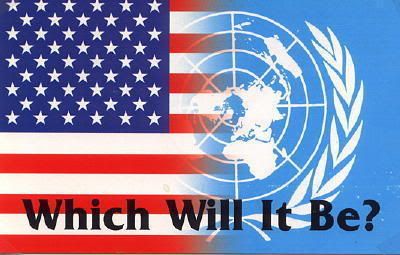
Nothing in President Kennedy’s enduring legacy has greater importance now - at the beginning of the 21st century - than his words on your Independence Day in 1962 when he proposed a new and global declaration of interdependence.


‘Today Americans must learn to think inter-continentally’ he said. ‘Acting alone by ourselves [America] cannot establish justice throughout the world. We cannot ensure America’s domestic tranquillity; provide for its common defence; or promote its general welfare; or secure the blessings of liberty to ourselves and our posterity. But joined with other free nations we can do all this and more’.


So if the 1776 Declaration of Independence stated a self evident truth - that we are all created equal – JFK’s Declaration of Interdependence in 1962 added another self-evident truth: that we are all of us - all of us throughout the world - in this together. Each of us our brother’s keeper, each of us - to quote Martin Luther King - part of an inescapable web of mutuality.


Yet no-one in 1962 could have foreseen the sheer scale of the new global challenges that our growing interdependence brings: their scale, their diversity and the speed with which they have emerged:


· the globalisation of the economy;
· the threat of climate change;
· the long struggle against international terrorism;
· the need to protect millions from violence and conflict and to face up to the international
consequences of poverty and inequality.


Challenges that all point in one direction – to the urgent necessity for global cooperation. For none of them - from economy to environment - can be solved without us finding new ways of working more closely together.


To recognize this is important. But simply to acknowledge that there are no ‘Britain-only’ or ‘Europe-only’ or ‘America-only’ solutions to the global threats and challenges we face - or to say we are all internationalists now - will change nothing in itself.


Instead, we must go much further: acknowledging that our common self-interest as nation states can be realised only by practical cooperation; that ‘responsible sovereignty’ means the acceptance of clear obligations as well as the assertion of rights.


And my argument today is simple:


· global problems require global solutions;


· the greatest of global challenges demands of us the boldest of global reforms;


· the most urgent of tests demand the broadest of global cooperation;


· and to address the worst evils of terrorism, poverty, environmental decay, disease and instability, we urgently need to step out of the mindset of competing interests and instead find common interests – summoning up the best instincts and efforts of humanity in a cooperative endeavour to build new international rules and institutions for the new global era.


[GORDON BROWN SETS FORTH THE MALTHUSIAN SOCIALIST'S 'TOP-TEN' LIST OF THREATS TRIGGER BY 'MARKET FAILURES' TO JUSTIFY A TOP-DOWN UN CENTRALIZED GLOBAL LEGAL, ECONOMIC & POLITICAL GOVERNANCE]


Let me sketch out the challenges we face, the new directions I favour and the solutions I propose.


[1] The first - and perhaps because of the credit crunch the most immediate - challenge is economic globalisation itself.


And does not the recent sharp and still unresolved credit crunch which has affected the whole world now demonstrate that with global flows of capital already replacing the old national flows and global sourcing of goods and services replacing the old local sourcing, national systems of supervision and economic management are simply inadequate to cope with the huge cross-continental flows of capital in this interdependent world?


But is not the issue even bigger than that? That we are seeing in the scale, scope and speed of globalisation the biggest restructuring of economic life since the industrial revolution. Already Asia is manufacturing more than Europe and soon America; China alone is producing half the world’s clothes and half the world’s electronics. And we are only at the beginning of this shifting balance of power as every day more and more of the 4 billion Asian people are entering the world’s industrial economy.


And the reality is that we are all affected now by what happens in Asia or Latin America or Africa. And if we do not work across countries and continents to create a globalisation that is inclusive for all, then not only will the poorest of the world who lose out react to being excluded, but people in our own countries will feel - as many do today - victims not beneficiaries of the process of change - losers and not winners - and protectionist sentiment will gain ground.


I am optimistic about the benefits of interdependence, and certain that globalisation need not be a zero sum game that says if China or India benefits America or Europe loses. Why? Because over the next 25 years we will see the world economy doubling in size, creating a billion new professional or skilled jobs worldwide, offering opportunity for any who have the creativity, ingenuity, skills and talent to benefit - a time of huge opportunity even if it is also a time of change and risk.


And in the spirit of John Kennedy who summoned us to think of how we can make our interdependence work for the benefit of all, I believe a new global deal is possible:


· in the industrial countries like ours a guarantee that even if we cannot keep people in their last job we can ensure people will be able to obtain the next job - through investment in skills and income support wherever necessary;


· and in the poorest countries a new deal that in return for opening up to trade, freeing regimes from corruption and a commitment to economic growth, we support the development of education, infrastructure and healthcare.


And the benefits will flow most widely and more effectively if instead of trying to pursue beggar-my-neighbour policies, or erecting national barriers to shelter people from change, we cooperate across frontiers to maximise the opportunities. But to do this we have no choice now – and his is my main argument - but to consider and agree new global rules and create new global institutions so that not some but all can benefit from change.


[2] And how do we face up to the second great global challenge? — that of climate change which is already creating the first climate change droughts, the first climate change evacuations, the first climate change refugees?


It is this challenge that starkly defines the most basic truth of our human condition: that, if as far ahead as we can foresee, there is no other planet for us and our children - we must cooperate to make our stewardship of this earth work.


So it will not be enough to discuss purely national initiatives or even to quarrel over the burden of sharing emission reductions while global warming continues unchecked. Because global problems cannot be solved without global solutions we need to join together in recognising that cooperation in an interdependent world means a single framework for global and national targets, and for the first time a truly global carbon market.


[PROOF THAT PROPONENTS OF TOP-DOWN UNITED NATIONS-CENTRED GLOBAL GOVERNANCE ARE USING THE ISSUE OF CLIMATE CHANGE TO CALL FOR NEW STRINGENT NON-SCIENCE AND NON-ECONOMICS-BASED PRECAUTIONARY PRINCIPLE REGULATIONS THAT WOULD REACH INTO THE UNITED STATES HEARTLAND AND RESHAPE, 'RENEW' AND 'CHANGE' ITS UNIQUE, INDIVIDUAL-BASED CONSTITUTIONAL LEGAL AND FREE MARKET ECONOMIC SYSTEMS SO THAT THEY MORE CLOSELY RESEMBLE EUROPE'S COMMUNITARIAN NAPOLEONIC CODE, WHICH TELLS PEOPLE WHAT THEY CAN AND CANNOT DO FOR THE SAKE OF THE COMMON GOOD.]


[3] A third force of globalisation is the sobering reality that has already struck home in both Britain and America: that we are exposed - unpredictably but directly - to the risk of violence and instability originating in failed and rogue states around the world. Once we feared rival nations becoming too strong; now the worst threats come from states that are too weak. And we know that the richest citizen in the richest country can be directly affected by what happens to the poorest citizen in the poorest country.


So today no country can say that failed or failing states are someone else’s problem. They are a problem for us all. Instability in one country affects stability in all countries; an injustice anywhere is now a threat to justice everywhere. And that is how we must respond: not walking away as we did in Rwanda at the cost of hundreds of thousands of lives, but by engaging as hard-headed internationalists - through diplomatic, economic, and yes when necessary military action - to prevent crimes against humanity when states can no longer do so.


Linked to failed and failing states is the spread of international terrorism, in the form of loosely affiliated global networks that threaten us and other nations across oceans and continents — and let me praise President Bush for leading the world in our determination to root out terrorism and our common commitment that there be no safe haven for terrorists.


Where once we imagined that nuclear or biological weapons were a state monopoly, now there is the prospect of hidden unofficial arsenals in the hands of terrorists. And to counter such threats effectively we must work together across national borders.


We will at all times be steadfast and resolute against terrorism at home and abroad using all our resources - military, security, policing, intelligence – to expose and defeat terrorists. And vitally in this struggle we must mobilise the power of ideas, of shared values and of hopes that can win over hearts and minds.


Just as importantly, we must recognize that our enemy, as George Marshall put it in a great speech in Boston sixty years ago, will never be just one country but ‘hunger, poverty, desperation, and chaos’. And while today many millions live well, we have 2.5 billion neighbours who subsist on less than 2 dollars a day: a fact that demonstrates what Winston Churchill once called ‘the gaping sorrows of the left out millions’.


And ours is already a world where no ‘us’ - however rich or influential - can pull up the drawbridge in an attempt to gain protection from a ‘them’


New contagious diseases can advance swiftly from the national to the global with all the speed of international air travel.


And as global transport networks and global communications erode or abolish traditional frontiers, national crime all too readily becomes international crime.


So global neighbours are closer than ever before - and we to them. And the critical question is this: how we plan and act together across continents to tackle disease, crime, mass migration and mass poverty?


And we must recognise too that our interdependence in the economy, environment, security, poverty, disease and crime is now underpinned by the truly revolutionary impact of advancing technology whereby a device on a desk or in the palm of our hand puts us in contact with anyone, anywhere, anytime. It is a revolution that is rewiring, multiplying and accelerating social, economic, and political connections within and between our nations, to their total and irreversible transformation. A revolution which potentially transforms democratic life and means the world can never be the same again.

[THIS IS A NUANCED REFERENCE TO THE NEED FOR OBAMA-TYPE 'CHANGE' WHICH LEAVES BEHIND AMERICANS' CONCEPTIONS OF INDIVIDUALISM, FREE MARKETS, AND U.S. CONSTITUTIONALLY GUARANTEED RIGHTS, ESPECIALLY TO PRIVATE PROPERTY. ONE NEED ONLY LOOK AT HOW GORDON BROWN IGNORED THE WISHES OF THE BRITISH PEOPLE TO HOLD A REFERENDUM ON THE REFORM EU CONSTITUTION/ TREATY - HE BASICALLY OVERRODE THEIR DUE PROCESS RIGHTS!! NOW HE & HIS EUROPEAN COLLEAGUES WANT THE AMERICAN DEMOCRATIC PARTY, SHOULD THEY SECURE THE U.S. PRESIDENCY, TO DO THE SAME - i.e., TO REINTERPRET OR OTHERWISE BURN THE CONSTITUTION IN FAVOR OF A NEW GLOBAL VISION/MISSION. AMERICANS HAVE A RIGHT TO KNOW WELL BEFORE THE PRESIDENTIAL ELECTIONS].


A few years ago in regime after regime sentries could stand over fax machines as governments sought to deny information to their peoples. Today - as we have seen in Burma - pictures of repression sent across the internet can alert the whole world; and - as we saw in the Philippines - one million people exchanging text messages on mobile phones brought down a country’s leader —- what was called the first ‘coup de text’.


So the dawn of the digital age is enabling people to become the authors of change rather than its subjects, the agents of history rather than its victims. And within a decade or two, it will create a virtual world of individuals speaking instantly across once virtually impassable distances, communities springing up across the internet, a rising sense of global consciousness of millions of global citizens in the making.


To adapt an aphorism of President Kennedy, the new frontier is that there is no frontier…


· no frontier for the internet, for the mobile phone, for e-mails, for the cyber-world;
· no frontier for the capacity of individuals to influence, inform or even infuriate each other.


And because times are new, we must - in Robert Kennedy’s words -think anew. We must, as he said, leave behind yesterday and embrace tomorrow.


So while in President Kennedy’s time foreign relations were founded almost exclusively on the relative power of governments, today we must recognise the relevance to foreign policy of what we see before our eyes:


· that everywhere around us people are forming global associations, global connections and global communities;

· that all over the world from culture to education to social action individuals are harnessing people power to transcend states – for good, and sometimes for ill;

· and they are compelling institutions and authorities to follow their example — with regulators, environmental and development agencies, militaries, law enforcement and judges all having to cooperate directly across frontiers.


As greater people power drives forward the creation of this new world order, foreign policy has increasingly to be explained daily to a questioning public who will increasingly also demand to know the basis on which we act.


And if in the 18th and 19th centuries nation states looked to the concept of the balance of power for their security - and in the latter half of the 20th briefly put their faith in the concept of mutually assured destruction - we, amid the emerging complexities of the 21st century, must recognize afresh the power of John Kennedy’s Declaration of Interdependence. And must firmly root our international system in the values we hold in common — shaping more than a new world order, creating instead a truly global society:


· a global society no longer just based on the power of states delineated by borders but on the aspirations of people that transcend borders;

· a global society no longer founded just on balancing competing interests but on building institutions that foster mutual interests because they are grounded in common values.


Indeed I would go further: in democracies such as ours - and now in a global society where people can communicate, lobby, petition and express and organize their views freely across continents - acting upon our interdependence demands that we found our cooperation and build alliances upon those enduring and humane values we share in common —– values that emphasise at all times the dignity and liberty of the individual, the indispensability of justice within and between nations, and our responsibilities as citizens of both our own nation and of the world.


Throughout history we have too often allowed ourselves to believe that the foreigner was at best a stranger and at worst an enemy; that across national borders our ethical values could be as different as our cuisine or fashion or language. In fact, the more we discover about each other the more we find how often we subscribe to similar ideals - regardless of geography, history or identity.


For through each of our diverse heritages there runs a single, powerful moral sense: one that is reflected and replicated throughout the world’s great religions and also in the moral philosophy of those who adhere to none that shows we are not moral strangers but there is a moral sense common to us all.


When Christians say: ‘do to others what you would have them do to you’;

When Muslims say: ‘no one of you is a believer until he desires for his brother that which he desires for himself’;

When Jews say ‘what is hateful to you, do not to your fellow man’;

When Hindus say ‘this is the sum of duty: do naught unto other which would cause pain if done to you’;

When Sikhs say ‘treat others as you would be treated yourself’;

When Buddhists say ‘hurt not others in ways that you yourself would find hurtful’;
….they reflect a common truth dear to billions of adherents of those and other religions that is true also of all the great secular thinkers: that we not only cooperate out of need but there is a human need to cooperate; and that cooperation is built on the desire for liberty and the call to justice: respect for the dignity of every individual and our sense of what is equitable and fair.


Call it as Lincoln did ‘the better angels of our nature’;

Call it as Winstanley did ‘the light in man’;

Call it ‘our moral sentiment’ as Adam Smith did;

Call it conscience;

Call it the moral sense;


it is on the basis of our common humanity and common values that that even people thousands of miles apart can share the pain of others and believe in something bigger than themselves. And it is for our generation to bring to life these shared values - which already have the capacity to unite people across the world - in proposals to create the architecture of a global society.


[THIS IS THE SAME AS THE 'COMMON HERITAGE OF MANKIND' DOCTRINE EMBEDDED IN THE UNITED NATIONS LAW OF THE SEA CONVENTION, WHICH ESTABLISHES A 'GLOBAL COMMONS' THAT IS TO BE REGULATED BY A TOP-DOWN, UNITED NATIONS-CENTRED BODY]


Acting upon our interdependence does not mean a new version of the old balance of power arrangements based on opposing powers bargaining for their own narrow advantage.


[THIS IS THE SAME THING AS SAYING THAT INDIVIDUAL PRIVATE PROPERTY RIGHTS SHOULD NO LONGER BE BASED ON THE NOTION OF 'NEGATIVE' RIGHTS, EXISTING IN OPPOSITION TO AND AS AGAINST BOTH THE SOVEREIGN AND OTHER PROPERTY OWNERS & CITIZENS, BUT RATHER ON THE NOTION OF 'POSITIVE' PROPERTY RIGHTS WHICH ARE GRANTED, SHAPED AND LIMITED BY THE SOVEREIGN FOR THE SAKE OF THE COMMUNITY - IN THIS CASE, NOT THE NATIONAL COMMUNITY, BUT THE GLOBAL COMMUNITY.]


But nor does it mean abandoning national interests. Instead, the very fact of interdependence requires nations to work out new ways of working founded on the recognition that they can best pursue their national interests by invoking broader global alliances – and that these global alliances must be grounded in shared global goals and globally agreed rules and institutions.


[OBVIOUSLY, MR. BROWN AND HIS FELLOW EUROPEAN SOCIALISTS ARE SENSITIVE TO THE ACCUSATION THAT THEY WISH TO DO AWAY WITH NATIONAL SOVEREIGNTY, BECAUSE THAT ARGUMENT CAN CAST A DEATH KNELL OVER THEIR GLOBAL GOVERNANCE PLANS - READERS MUST CAREFULLY SCRUTINIZE THE WORDS USED BY MR. BROWN AND HIS COLLEAGUES. AS THE FRENCH SAY, WHAT IS STATED IS IMPORTANT; BUT WHAT IS NOT STATED IS EVEN MORE IMPORTANT, BECAUSE ACCORDING TO FRENCH LOGIC, IF SOMETHING IS NOT STATED, IT IS PERMISSIBLE.]


There have been four great moments in the modern age when statesmen have come together to reorder the world:


· in 1648: in the Westphalia Treaty that followed Europe’s catastrophic Thirty Years War;
· in 1815: at the congress of Vienna after the Napoleonic wars;
· and twice in the last century: disastrously in 1919 at Versailles and - most significantly - in the late 1940s when, in a world wracked by total war, new global arrangements were agreed.


At that time - and in a breathtaking leap forward into a new world order – American visionaries helped form the United Nations, the World Bank, the International Monetary Fund; and they put in place a policy of unprecedented generosity - the Marshall Plan - which transferred 1 per cent of America’s national income each year for four years to the war ravaged economies of Europe —– and saved the free world.


[BUT AMERICAN VISIONARIES NEVER, NEVER INTENDED FOR THE U.S. TO SURRENDER IS NATIONAL CONSTITUTIONAL SOVEREIGNTY TO THE UNITED NATIONS!!]


Such was the impact of what they did for their day and age that Dean Acheson spoke of being ‘present at the creation’. And in a new era when the challenges of 2008 are different from those of 1945, we must summon inspiration from the vision, humanity and leadership shown by those reformers to guide our actions today.


And this is no longer an academic debate that can wait because change is too difficult to implement; or because we must consider at length what is to be done – with a view to doing nothing.


This is urgent. And the challenge is far reaching.


[MR. BROWN IS CORRECT IN SAYING THAT THE DISCUSSION ABOUT WHETHER THERE EXISTS AND SHOULD BE A MOVEMENT TOWARDS GLOBAL GOVERNANCE IS NO LONGER ACADEMIC - IT IS NOW OUT IN PUBLIC VIEW FOR ALL AMERICANS TO SEE. BUT, MR. BROWN IS INCORRECT IN SAYING THAT URGENT ACTION IS REQUIRED AND THAT DOING NOTHING IS NO LONGER ACCEPTABLE; RATHER, DOING NOTHING IS OFTEN THE BEST COURSE OF ACTION WHEN THE LEGAL, ECONOMIC & POLITICAL CONSEQUENCES OF DOING SOMETHING ARE UNCERTAIN, SWEEPING AND VERY EXPENSIVE. DEAR MR. BROWN, THE SUCCESS OR FAILURE OF THE EU EXPERIMENT IS STILL UNKNOWN, AND YET YOU AND YOUR FELLOW EUROCRATS INSIST THAT THE WORLD FOLLOW IN ITS PATH.]


The great Bostonian Emerson not only summed it up when he said: ‘what lies behind us and what lies before us are tiny matters compared to what lies within us’, but also warmed us of the radical consequences that follow: ‘do not go where the path may lead, go instead where there is no path and leave a trail’.


Those who build the present only in the image of the past will - in the words of Winston Churchill - miss out entirely on the opportunities of the future.


And when he warned of countries facing change who were too timid that they were ‘resolved to be irresolute, adamant for drift, solid for fluidity, all powerful to be impotent’, it is a powerful reminder of the need to act now.


First, a global society must embody and enact our obligations to each other not just within borders but across borders.


So I am proposing today reforms that will enable our international and regional institutions to do what they failed to do in the Rwandan genocide 15 years ago and are even now still failing to achieve amidst the tragedy of Darfur: to prevent conflict, to stabilise and then to reconstruct failing and failed states; and specifically to shield men, women and children who are being threatened by genocide, ethnic cleansing, war crimes or crimes against humanity. And so the United Nations must become a consistent defender of the interests of the world’s people – not simply those of states.


And this means new actions to prevent and respond to the breakdown of states and societies by:


· helping vulnerable nations develop the capacity to uphold the rule of law, by encouraging civil society, training police and security forces;


· more systematic use of earlier Security Council action including targeted sanctions and, as a last resort, the threat - and if necessary the use - of military force;

· new resources in the form of a UN crisis recovery fund to ensure proper financing for
stabilisation and reconstruction in countries emerging from conflict;

· and new encouragement for regional organisations from the African Union to the European Union to mount peace, stability and reconstruction efforts.


[PERHAPS MR. BROWN AND HIS EUROPEAN COLLEAGUES FEEL THE COLLECTIVE GUILT OF HAVING PILLAGED MOST OF THE AFRICAN SOCIETIES, THEY PREVIOUSLY HAD COLONIZED, HAVING LEFT THE AFRICAN PEOPLES WITH BARELY ANYTHING RESEMBLING A FREE, ENLIGHTENED AND DIGNIFIED EXISTENCE. IS MR. BROWN NOT RESTATING WHAT 19TH CENTURY REFERRED TO AS THE 'WHITE MAN'S BURDEN'???]


In 1960 President Kennedy called for an American peace corps - harnessing the idealism Americans felt in the face of deprivation and underdevelopment. Today in the same spirit we should create a new kind of global peace and reconstruction corps - an international stand-by capacity of trained civilian experts, ready to go anywhere at any time to help rebuild states.


Second, I favour strengthening the role of international institutions in ensuring a unified global response to terrorism - through asset freezes, travel bans, proscriptions, raising international legal standards, and unflagging resistance to extremist ideologies – measures led by President Bush as we discussed yesterday. But as he and I agree terrorism will ultimately be defeated only when it is isolated and abandoned.


So I propose a new cultural effort on the scale of the cultural Cold War in the ’40s, ’50s and ’60s: an initiative that involves foundations, charities, faith groups, elders and young people — and engages TV, radio, the internet and all forms of multimedia communication across all cultures, faiths and tongues to make the case for democracy and respect for human rights: how these offer the best future for us all; and how - in the face of these arguments - violent extremism is both unnecessary and wrong.


We will support interfaith dialogue in every part of the world. And with people power in a global society already advancing democracy widely across the world - from 20 per cent of nations being democratic in the early 1970s to 60 per cent today - we must encourage the development of the daily accountability, transparency and responsiveness and the civil societies which are at the heart of true democracies.


Third, a global society demands new global agreements and strengthened global institutions to protect and safeguard essential global resources.


So by the end of next year we must secure a new global climate change agreement – with the UN at its centre - with binding targets for all developed countries, including America and Britain. I want to see at least a halving of global emissions by 2050. And we need new incentives for developing and emerging economies - helping them slow their growth in emissions through new flows of finance and technology.


A global agreement is more than a set of targets: it must include an international carbon market as the surest and most efficient way to achieve our aims — eventually generating up to $100 billion dollars a year to fund ‘green’ development.


[UN-BROKERED, EU SUPPORTED CLIMATE CHANGE CHICANERY]


And while we strengthen the World Bank’s focus on poverty reduction, I have a radical proposal to make the World Bank a bank for development and the environment — transferring billions in loans and grants to encourage the poorest countries to adopt alternative sources of energy and in doing so ensuring that its development programmes provide an integrated approach to both poverty eradication and global warming.


We require a similar global coordination of effort on food where we face the worst food shortages for decades. And on disease and global pandemics where - led by the World Health Organisation - the priority is to improve early warning, increase the stocks of global vaccine supplies and develop a more coordinated global response. We need now to ensure there are clear responsibilities and decision-making procedures at every level. And Britain will bring together all interested parties to agree the new international action that is now essential to prevent pandemics and the spread of ill health.


Globalisation can work if it is an inclusive globalisation and protectionism can be avoided only by means of open economies, free trade and flexibility accompanied by policies for fairness and justice - policies that include investment in education and other social goods in the industrialised countries and a new deal for the poorest countries.


[MR. BROWN ALLUDES TO WEALTH-REDISTRIBUTION ORIENTATED TRADE AND TECHNOLOGY POLICIES THAT UNDERMINE U.S. SOVEREIGNTY, ECONOMIC & TECHNOLOGY COMPETITIVENESS, AND FURTHER DRAINS U.S. JOBS - EXCEPT THOSE RELATING TO AN INTERNATIONAL UN-BASED PEACE CORPS.]


And my proposal here is that we set new global rules for a new 21st century global economic system with:


· a global trade deal that benefits rich and poor countries alike;

· new international financial architecture and economic institutions that end the mismatch between global capital flows and only the national supervision of them — with the IMF an early warning system for the global economy, focused on crisis prevention rather than just crisis resolution;

· and a new deal as bold as the Marshall Plan of the 1940s between rich and poor under which as developing countries open up to trade, address corruption and pursue policies for economic development and developed countries agree to make available new resources so that we can say of this generation: the preventable diseases of TB, polio and malaria are eradicated and for the first time in our history every child enjoys education.


And let me just explain why it is so important. When I visited Abuja in Nigeria I found that side by side with a dilapidated school that we did not support enough was a madrassas where Al Qaeda inspired extremists were enticing children into their school offering free high standard schooling – so our offer of education for all is not just an education and economic policy for the developing world it is a defence and security policy for the developed world.


So a new World Bank; a new International Monetary Fund; a reformed and renewed United Nations mandated and resourced that is greater than the sum of its parts; strong regional organisations from the European Union to the African Union able to bring to a troubled world the humanitarian aid, peacekeeping and the support for stability and reconstruction that has been absent for too long — all built around a new global society founded on revitalised international rules and institutions, and grounded in the great values we share in common.


[MR. BROWN & HIS EUROCRAT/UN BUREAUCRAT COLLEAGUES WANT AMERICA TO KISS 'GOODBYE' ITS UNIQUE CONSTITUTION, WHICH PROTECTS INDIVIDUALISM, 'NEGATIVE' PRIVATE PROPERTY RIGHTS, FEDERALISM, BALANCE OF POWERS, GOVERNMENT ACCOUNTABILITY, DUE PROCESS OF LAW (INNOCENCE UNTIL PROVEN GUILTY), AND U.S. NATIONAL SOVEREIGNTY.]


And during the year to come I want this debate about change to become a global dialogue about renewal as we embark upon a task perhaps more ambitious than even the Bretton Woods Conference in 1944.


Already the Commonwealth of 53 nations has agreed to convene a task force on these issues, the first meeting in London in June.


[THE COMMONWEALTH OF NATIONS IS AN ASSOCIATION OF 53 INDEPENDENT SOVEREIGN STATES, MOST OF WHICH ARE FORMER BRITISH COLONIES. See:
The Commonwealth Secretariat, at: http://www.thecommonwealth.org/Internal/20596/about_us ].


Reform and renewal should feature on the G8 and EU agendas.


I welcome Harvard University’s interest in taking forward work on the proposals.
I suggest next year a series of international conferences and meetings to agree how to transform these ideas into real change.


And we must engage business, NGOs, faith groups and individuals from all nations and continents in these debates.


American leadership is and will be indispensable. And now is an opportunity for an historic effort in cooperation: a new dawn in collaborative action between America and Europe – a new commitment from Europe that I believe all European leaders can work with America to forge stronger transatlantic links. For I sense common ground between our two great continents in the urgent need for renewal and reform.


[THIS STATEMENT IS FOR OBVIOUS USE BY PRESIDENTIAL CANDIDATES CLINTON & OBAMA]


And I also sense that this is the moment to bring in China, India, South Africa, Mexico, Brazil and other emerging countries to the heart of this debate – offering a greater role with the G8, to offer them more say in the IMF and World Bank, and to reform the security council of the United Nations.


Today - as we face these new global challenges - the tantalizing possibilities of a world where, as John Kennedy put it, the strong are just, the weak secure and the peace preserved are matched only by the terrifying risks of us failing to seize this moment.


For the first time in human history we have the opportunity to come together around a global covenant, to reframe the international architecture and build the truly global society. So today my call is not just to the public purpose of this generation but to the idealism of this and the next generation.


[THIS IS AN ALL-OUT ATTEMPT TO APPEAL TO AMERICA'S YOUTH IN ORDER TO 'RE-PROGRAM' AND RE-ORIENTATE THEM AGAINST THE CONCEPT OF U.S. NATIONAL SOVEREIGNTY WHICH, ACCORDING TO EUROPEAN ELITES AND UN BUREAUCRATS, IS CONSIDERED AN IMPEDIMENT TO GLOBAL PEACE, PROSPERITY, MORALITY & CIVITAS, IN FAVOR OF GLOBAL GOVERNANCE.]


History is not destiny. It is the sum total of the choices of each generation — the record of the vision of those who imagined and could see a better future, and believed they could touch the stars.


And if the 19th century became known as the century of industrialisation and the 20th century became defined as the century of world wars, the 21st century can be the first progressive century in which we created the first truly global society.


Forty years ago this year amidst tragedy and grief America lost two towering visionaries - Martin Luther King in April and Robert Kennedy in June.


Both of them refused to accept that the way things are is the way things must be and the way things must stay;

Both of them were men of conscience and courage who turned history in the direction of our best hopes;

Both of them believed in essential truths that I am celebrating today - that peace and prosperity are indivisible, that prosperity to be sustained has to be shared; and believed too that the greatest of social changes are built on the strongest of ethical foundations.


And when today cynics dismiss as and impossible dream or naïve idealism proposals to create the institutions of a truly global society let us remind them that people used to think black civil rights a distant dream, the end of the cold war an impossible hope, the ending of apartheid in our generation the work of dreamers, debt relief for the poorest countries an unrealisable idea.


It is fitting that this library - standing at the edge of the sea - is shaped like a great sail. For those it memorialises, to paraphrase Robert Kennedy, truly did send forth ‘ripples of hope’ that continue to move across history as a mighty wave.


And so let us have confidence we can discover anew in ourselves the values we share in common, let us have confidence we can act upon John Kennedy’s declaration of interdependence, and let us have confidence we can create a global covenant across nations to make peace and prosperity real in our generation.

Sunday, April 13, 2008

US Constitutional Due Process Protections Do Not Exist in the European Union: You Are Guilty Until Proven Innocent! Why Then, Harmonize With EU?

[READERS SHOULD BE AWARE THAT THE 2008 U.S. PRESIDENTIAL & CONGRESSIONAL ELECTIONS WILL ACTUALLY SERVE AS A PLEBISCITE TO DETERMINE WHETHER THE U.S. SHOULD FURTHER HARMONIZE ITS CONSTITUTIONAL & STATUTORY LAWS WITH THOSE OF EUROPE AND THE REST OF THE WORLD. IF EUROPE IS A 'STRONG DEMOCRACY', RELATIVELY SPEAKING, THAT LACKS CONSTITUTIONAL DUE PROCESS OF LAW AT U.S. STANDARDS, WHICH, AMONG OTHER THINGS, REQUIRES PROBABLE CAUSE BEFORE THE ISSUANCE OF A WARRANT, AND A PRESUMPTION OF INNOCENCE UNTIL ONE IS PROVEN GUILTY, WOULD THEN, SUCH HARMONIZATION ACTUALLY BE IN THE BEST INTERESTS OF AMERICAN CITIZENS???]


http://www.mondaq.com/article.asp?articleid=56284


European Union: European Commission Raids Pharmaceutical Companies To Start Sector Inquiry


18 January 2008


Article by Jonathan Gowdy and Peter J. Edlind


On January 16, 2008, the European Commission launched a sector inquiry into the pharmaceuticals industry by carrying out a series of unannounced inspections of innovative and generic pharmaceutical companies. The targeted companies include both European and U.S. pharmaceutical companies with significant operations in Europe. The inquiry is likely to implicate important and controversial issues regarding the intersection of competition and intellectual property law, including the legality of patent litigation settlement agreements and conduct relating to the procurement and enforcement of intellectual property rights.


The sector inquiry is generally designed to provide the Commission with insight into commercial practices within the pharmaceutical industry; however, it was launched in response to the Commission’s concern that competition in the European pharmaceutical sector may not be working as it should. Specifically, the Commission noted that there has been a significant decrease in novel and generic medicines for human consumption entering the European pharmaceutical market in recent years.


The sector inquiry also follows two recent and significant enforcement actions by the Commission against firms in the pharmaceutical sector. In 2005, the Commission fined AstraZeneca €60 million for providing misleading representations to patent offices in the EU, and thereby restricting the entry of generic medicines to the market. Last year, the Commission also started proceedings against Boehringer for alleged misuse of the patent system to exclude competition in the area of chronic obstructive pulmonary disease drugs.


The Commission’s sector inquiry will focus on similar business practices; indeed the Commission’s announcement indicated it would examine whether the investigated parties’ exercise of patents and agreements between competitors, such as terms for litigation settlement agreements, are compatible with the EC Treaty’s rules on restrictive business practices. In addition, the inquiry will examine potential abuses of dominant position by market actors, including possible misuse of patent application procedures or frivolous lawsuits to prevent or deter launches of generic alternatives.


Enforcement actions in the United States on patent settlement agreements have proven controversial and even resulted in policy disagreements among the two U.S. antitrust agencies (i.e., the Department of Justice and the Federal Trade Commission) about the proper application of the antitrust laws. In addition, antitrust claims in the U.S. based on frivolous litigation or misuse of the patenting process generally must satisfy a high standard of proof. Thus, if the Commission’s sector inquiry results in any enforcement actions, they are likely to generate significant debate.


[DEAR EUROPEAN COMMISSION, WE IN AMERICA REFER TO THE SO-CALLED 'HIGH STANDARD OF PROOF' AS CONSTITUTIONAL DUE PROCESS OF LAW]


Finally, this sector inquiry is also notable because it is the first in which the Commission commenced the inquiry with dawn raids. (The Commission has in recent years carried out sector inquiries in the telecommunications, energy and financial services sectors, but all of these were initiated by sending out questionnaires to the targeted companies.) According to the Commission, the motivation to secure information in this manner stemmed from the fact that the information sought is usually considered by companies to be highly confidential and "may also be easily withheld, concealed or destroyed."


The Commission also recently used dawn raids in a merger investigation to investigate whether parties had integrated their business operations prior to obtaining clearance under the EU’s merger control regulations. It remains to be seen whether the Commission will continue to expand the use of dawn raids in non-cartel investigations; however, firms should ensure that their employees and in-house legal department are prepared for such an event.


The first results of the pharmaceutical sector inquiry are expected to be published in an interim report by the Commission this autumn and a final report due in the spring of 2009. Any subsequent competition law enforcement actions by the Commission (or EU member state competition authorities) against individual companies would be launched outside the framework of the sector inquiry.


Because of the generality of this update, the information provided herein may not be applicable in all situations and should not be acted upon without specific legal advice based on particular situations.


© Morrison & Foerster LLP. All rights reserved

-------------------------------------------------------------------------------------------------

http://www.ft.com/cms/s/0/4da369fa-c49e-11dc-a474-0000779fd2ac.html?nclick_check=1


Big drug companies raided in EU probe


By Andrew Jack in London and Tony Barber in Brussels


Published: January 17 2008 02:00 Last updated: January 17 2008 02:00


European regulators raided some of the world's biggest pharmaceutical companies yesterday in an inquiry into whether they conspired to keep up the price of drugs after patents expired.


Pfizer, GlaxoSmithKline, AstraZeneca and Sanofi-Aventis were among those that confirmed they had been visited as part of a European Commission-led probe into delays in the launch of low-cost generic drugs. Teva, the world's biggest generics company, was also targeted.


The inquiry will focus on whether the industry has abused patent rights to delay the introduction of low-cost generic alternatives. It will assess whether companies have made spurious attempts to extend the life of intellectual property rights or cut deals with one generic rival to the exclusion of others.


[WELL, THAT CERTAINLY JUSTIFIES SUSPENSION OF DUE PROCESS, DOESN'T IT!!]


The EU is increasingly concerned about the rising cost of medicines and declining innovation.


[WHY NOT THEN, PROVIDE A LEGAL ENVIRONMENT THAT PROMOTES MARKET-BASED INNOVATION, TECHNOLOGY TRANSFER AND COMMERCIAL LICENSING AND REDUCES NEEDLESS BUREAUCRATIC REGULATORY COSTS??]


Neelie Kroes, competition commissioner, said: "If we have the feeling that something is rotten in the state, then let's take the opportunity to find out."


[MS. KROES ACTS MORE LIKE A REGULATORY DICTATOR THAN A DIRECTOR - IS THE BUREAUCRATIC POWER GETTING TO HER HEAD??]


The raids, which began on Tuesday, broke with Commission practice in that no advance notice was given. Previous sectoral inquiries were launched with questionnaires sent to companies.


"It's certainly novel and rather aggressive, even. Dawn raids presuppose that the Commission has got a whiff of something they want to investigate," said one Brussels-based lawyer specialising in competition issues.


Europeans spent €200bn (£150bn) a year on pharmaceuticals, or €400 each, Ms Kroes said.


"If innovative products are not being produced, and cheaper generic alternatives to existing products are in some cases being delayed, then we need to find out why and, if necessary, take action," she added.


[SOUNDS LIKE THE EUROPEAN COMMISSION IS ORDERING PHARMACEUTICAL COMPANIES TO PRODUCE INNOVATIVE HEALTH CARE PRODUCTS. SOUNDS LIKE THE 4TH REICH!!]


The Commission stressed that its visits were the starting point for a broad inquiry, rather than a response to "positive indications of wrongdoing" by the targeted companies. It said that the "unannounced inspections" were designed to gather "highly confidential . . . information [which] may also be easily withheld, concealed or destroyed".


[THIS ACTUALLY SOUNDS LIKE A 'FISHING EXPEDITION'. DOES THE EUROPEAN COMMISSION HAVE WHAT WE CALL IN THE UNITED STATES, 'PROBABLE CAUSE'???]


The inquiry is set to issue interim findings by the autumn and final results in spring 2009. It will examine whether pharmaceutical practices infringe EU treaty prohibitions on restrictive practices.


The generic drugs industry, which produces cheaper but chemically identical versions of medicines once their patents expire, has long accused innovative drug manufacturers of "ever-greening", or using spurious grounds to delay competition by extending their exclusive intellectual property rights.


[OF COURSE THEY HAVE! THEY'RE IN COMPETITION WITH THE BRAND NAME COMPANIES!! THEY WANT WHAT THOSE COMPANIES HAVE, FOR FREE!]


Pfizer, GSK, Teva, Sanofi-Aventis, AstraZeneca, Boehringer-Ingelheim and Merck of the US all confirmed that they were contacted by commission officials. Most would make no further comment. "We are co-operating with the inquiry," said AstraZeneca.

-------------------------------------------------------------------------------------------------

http://www.ft.com/cms/s/0/eb99c8a8-c49d-11dc-a474-0000779fd2ac.html?nclick_check=1


Pharma feels the heat as Brussels scrutinises competition


By Andrew Jack in London and Tony Barber in Brussels


Published: January 17 2008 02:00 Last updated: January 17 2008 02:00


The European Commission probe into the pharmaceutical industry, announced yesterday, illustrates how regulators are turning up the heat on a sector already suffering from falling productivity, growing competition and public discontent with the rising prices of new -medicines.


Competition lawyers say the inquiry also reflects a new appetite in Brussels for tackling intellectual property issues, driven by its success in cases such as the Microsoft prosecution, its growing experience in the drug industry and parallel moves by US regulators.


"The Commission is making sure everyone knows that it has decided to pursue a proactive, pro-competition agenda," said one Brussels-based lawyer.


[WHAT THIS LAWYER MEANT TO SAY IS THAT THE COMMISSION WANTS EVERYONE TO KNOW THAT THEY DON'T HAVE ANY CONSTITUTIONAL DUE PROCESS RIGHTS TO WHICH THE 'STATE' (EU COMMISSION) IS SUBJECT!!]


In 2005, the Commission fined AstraZeneca, the Anglo-Swedish group, €60m ($87.9m, £44.8m) in a ground-breaking case that highlighted practices likely to come under scrutiny in the latest investigation.


AstraZeneca, which is appealing the ruling, was found guilty of abuses to prevent generic rivals from competing against Losec, its anti-ulcer medicine.


It was accused of extending the duration of its intellectual property rights unfairly by providing misleading dates for its first filing with regulators in Europe.


It also de-registered older formulations of the drug in some countries, which added barriers to efforts by generic players to win regulatory approval for copies.


[THIS AMOUNTS TO A 'TAKING' OF PRIVATE PROPERTY FOR 'PUBLIC USE' WITHOUT 'JUST' COMPENSATION IN THE UNITED STATES]


Greg Perry, head of the European Generic Medicines Association, the trade body, said he welcomed the EU probe on condition that it studied issues of concern to his members.


These include "frivolous litigation", by which drug companies seeking to protect patents have succeeded in winning injunctions and authorisation for bailiffs' raids against generic rivals in lower courts across Europe to stall the launch of cheaper medicines.


He also expressed concern about "ever-greening", by which drug companies win additional patent protection on medicines by filing for minor modifications, such as reformulations to allow a pill to be taken once rather than twice a day.


Nellie Kroes, EU competition commissioner, said yesterday: "Pharmaceutical markets are not working as well as they might. Patent protection has never been stronger, but the number of patents coming to market has been declining."


[SOUNDS JUST LIKE THE STATEMENT OF A PHILOSOPHER KING BUREAUCRAT!]


The EU's probe may not prove entirely comfortable for generic companies. One practice likely to be scrutinised is when a pharmaceutical company pays a generic rival to drop a legal challenge to patents on its drugs.


[THIS IS A BACKHANDED WAY OF WARNING THE GENERIC COMPANIES THAT, IF THE EU COMMISSION CAN GET AWAY WITH DEPRIVING THE BRANDED PHARMA COMPANIES OF CONSTITUTIONAL DUE PROCESS, THEN THE GENERIC MANUFACTURERS ARE LIKELY TO BE TARGETED NEXT AND DEPRIVED OF THEIR CONSTITUTIONAL RIGHT TO DUE PROCESS! IN OTHER WORDS, WHAT GOES AROUND, ULTIMATELY COMES AROUND]


Another tactic involves signing an exclusive deal with an "authorised" generic manufacturer, and agreeing commercial terms that limit the normal sharp erosion in price of a generic medicine from that of the patented medicine on which it is based.


Nevertheless, the relatively modest discounts that often result in Europe - far less than in the US - are not simply the result of deals between companies. They also reflect national governments' policies on drug reimbursement and protectionism.
Copyright The Financial Times Limited 2008

------------------------------------------------------------------------------------------------
http://www.economist.com/world/europe/displaystory.cfm?story_id=9832900


Charlemagne


Brussels rules OK


Sep 20th 2007


From The Economist print edition


How the European Union is becoming the world's chief regulator


A VICTORY for consumers and the free market. That was how the European Commission presented this week's ruling by European judges in favour of its multi-million euro fine on Microsoft for bullying competitors. American observers had qualms. Would a French company have been pursued with such vigour? Explain again why a squabble among American high-technology firms ends up being decided in Brussels and Luxembourg (where Euro-judges sit)? One congressman muttered about sneaky protectionism and “zealous European Commission regulators”. It certainly seemed zealous of the competition commissioner, Neelie Kroes, to say that a “significant drop” in the software giant's market share was “what we'd like to see”.


More broadly, the ruling confirms that Brussels is becoming the world's regulatory capital. The European Union's drive to set standards has many causes—and a protectionist impulse within some governments (eg, France's) may be one. But though the EU is a big market, with almost half a billion consumers, neither size, nor zeal, nor sneaky protectionism explains why it is usurping America's role as a source of global standards. A better answer lies in transatlantic philosophical differences.


The American model turns on cost-benefit analysis, with regulators weighing the effects of new rules on jobs and growth, as well as testing the significance of any risks. Companies enjoy a presumption of innocence for their products: should this prove mistaken, punishment is provided by the market (and a barrage of lawsuits).


The European model rests more on the “precautionary principle”, which underpins most environmental and health directives. This calls for pre-emptive action if scientists spot a credible hazard, even before the level of risk can be measured. Such a principle sparks many transatlantic disputes: over genetically modified organisms or climate change, for example.


In Europe corporate innocence is not assumed. Indeed, a vast slab of EU laws evaluating the safety of tens of thousands of chemicals, known as REACH, reverses the burden of proof, asking industry to demonstrate that substances are harmless. Some Eurocrats suggest that the philosophical gap reflects the American constitutional tradition that everything is allowed unless it is forbidden, against the Napoleonic tradition codifying what the state allows and banning everything else.


[THIS SOUNDS EERILY SIMILAR TO HOW THE 110TH CONGRESSIONAL MAJORITY IS TRYING TO CHANGE U.S. LAWS, AND WHAT MADAME CLINTON RECOMMENDS AS A 'SOLUTION' TO AMERICA'S PROBLEMS, & MONSIEUR OBAMA TOUTS AS THE TYPE OF 'CHANGE' NEEDED IN AMERICA!!]


Yet the more proscriptive European vision may better suit consumer and industry demands for certainty. If you manufacture globally, it is simpler to be bound by the toughest regulatory system in your supply chain. Self-regulation is also a harder sell when it comes to global trade, which involves trusting a long line of unknown participants from far-flung places (talk to parents who buy Chinese-made toys).


A gripping new book* by an American, Mark Schapiro, captures the change. When he began his research, he found firms resisting the notion that the American market would follow EU standards for items like cosmetics, insisting that their American products were already safe. But as the book neared completion, firm after firm gave in and began applying EU standards worldwide, as third countries copied European rules on things like suspected carcinogens in lipstick. Even China is leaning to the European approach, one Procter & Gamble executive tells Mr Schapiro, adding wistfully: “And that's a pretty big country.”


The book records similar American reactions to the spread of EU directives insisting that cars must be recycled, or banning toxins such as lead and mercury from electrical gadgets. Obey EU rules or watch your markets “evaporating”, a computer industry lobbyist tells Mr Schapiro. “We've been hit by a tsunami,” says a big wheel from General Motors. American multinationals that spend money adjusting to European rules may lose their taste for lighter domestic regulations that may serve only to offer a competitive advantage to rivals that do not export. Mr Schapiro is a campaigner for tougher regulation of American business. Yet you do not have to share his taste for banning chemicals to agree with his prediction that American industry will want stricter standards to create a level playing-field at home.


Winning the regulatory race


One American official says flatly that the EU is “winning” the regulatory race, adding: “And there is a sense that that is their precise intent.” He cites a speech by the trade commissioner, Peter Mandelson, claiming that the export of “our rules and standards around the world” was one source of European power. Noting that EU regulations are often written with the help of European incumbents, the official also claims that precaution can cloak “plain old-fashioned protectionism in disguise”.


Europe had no idea the rest of the world was going to copy its standards, retorts a Eurocrat sweetly. “It's a very pleasant side-effect, but we set out to create the legislation we thought that Europe needed.” At all events, America's strategy has changed. Frontal attempts to block new EU regulations are giving way to efforts to persuade Brussels to adopt a more American approach to cost-benefit analysis. That would placate students of rigour, who accuse some European governments of ignoring scientific data and pandering to consumer panic (as shown by European campaigns against “Frankenstein foods”).


But rigour can quickly look like rigidity when it involves resisting competition. There is a genuine competition to set global regulatory standards, as Europe and America have discovered. There are also rising protectionist pressures. Perhaps zealous EU regulators may be what jumpy consumers need if they are to keep faith with free trade and globalisation. Viewed in such a light, even Microsoft's champions might hope that this week's verdict will help global competition in future.