http://usvisit.pm.gov.uk/2008/04/18/keynote-foreign-policy-speech
http://video.aol.com/video-detail/british-pm-browns-speech-at-the-jfk-library/2454956070 (video of Gordon Brown’s Speech)
Keynote foreign policy speech
Friday 1:09 pm (BST-5) Boston
This is the full text of the Prime Minister’s Kennedy Memorial lecture.
Kennedy Memorial lecture
The Rt Hon Gordon Brown MP
Prime Minister of the United Kingdom
18th April 2008
It is a great privilege to be here in Massachusetts, in Boston, and to be present with such distinguished guests in this library where history comes alive and values endure.
And a privilege too to be introduced by Senator Kennedy —– and I cannot speak too highly of the legislative record of Senator Kennedy who has served in the Senate for almost a quarter of the Republic’s life, earned his place as one of the greatest Senators in more than two centuries, and for its record of public service the Kennedy family is respected and renowned not just in this continent but in every continent of the world.
In the years since John F Kennedy’s Presidency:
· man has walked on the surface of the moon - directly as a result of his commitment, made on 25th May 1961;
· the Berlin Wall that he so famously denounced has been reduced to rubble – the Cold War ended, freeing eastern Europe, and making Europe whole again;
· and Nelson Mandela has walked free and apartheid – which John Kennedy denounced as ‘repugnant’ – has been swept away.
Great events, once the vision of one man - now landmarks in the history of the world.
And although he was President for less than three years I believe that the much of the progress of this half century has been testament to the scope of John Kennedy’s dream, the worth of the ideals he lived for, the breadth of hope he inspired in us, and most of all - amid all the wit, style, elegance and statesmanship that adorned the Kennedy Presidency - his summons to service —- one that never fails to inspire people to see farther and reach higher, a call which still reverberates around the world and always will. And his influence for good is so powerful that as Pericles said in ancient times even when he has left this world his influence ‘abides everywhere…woven into the stuff of other men’s lives’.
And although it is perhaps risky for a British Prime Minister to come to speak in Boston shortly before Patriots Day, I am pleased that over the past half century the special relationship between America and Britain which John Kennedy prized remains strong and enduring —- so firmly rooted in our common history, our shared values and in the hearts and minds of our people that no power on earth can drive us apart.
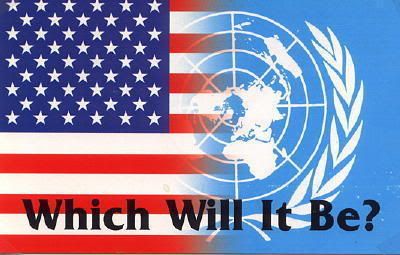 Nothing in President Kennedy’s enduring legacy has greater importance now - at the beginning of the 21st century - than his words on your Independence Day in 1962 when he proposed a new and global declaration of interdependence.
‘Today Americans must learn to think inter-continentally’ he said. ‘Acting alone by ourselves [America] cannot establish justice throughout the world. We cannot ensure America’s domestic tranquillity; provide for its common defence; or promote its general welfare; or secure the blessings of liberty to ourselves and our posterity. But joined with other free nations we can do all this and more’.
So if the 1776 Declaration of Independence stated a self evident truth - that we are all created equal – JFK’s Declaration of Interdependence in 1962 added another self-evident truth: that we are all of us - all of us throughout the world - in this together. Each of us our brother’s keeper, each of us - to quote Martin Luther King - part of an inescapable web of mutuality.
Yet no-one in 1962 could have foreseen the sheer scale of the new global challenges that our growing interdependence brings: their scale, their diversity and the speed with which they have emerged:
· the globalisation of the economy;
· the threat of climate change;
· the long struggle against international terrorism;
· the need to protect millions from violence and conflict and to face up to the international
consequences of poverty and inequality.
Challenges that all point in one direction – to the urgent necessity for global cooperation. For none of them - from economy to environment - can be solved without us finding new ways of working more closely together.
To recognize this is important. But simply to acknowledge that there are no ‘Britain-only’ or ‘Europe-only’ or ‘America-only’ solutions to the global threats and challenges we face - or to say we are all internationalists now - will change nothing in itself.
Instead, we must go much further: acknowledging that our common self-interest as nation states can be realised only by practical cooperation; that ‘responsible sovereignty’ means the acceptance of clear obligations as well as the assertion of rights.
And my argument today is simple:
· global problems require global solutions;
· the greatest of global challenges demands of us the boldest of global reforms;
· the most urgent of tests demand the broadest of global cooperation;
· and to address the worst evils of terrorism, poverty, environmental decay, disease and instability, we urgently need to step out of the mindset of competing interests and instead find common interests – summoning up the best instincts and efforts of humanity in a cooperative endeavour to build new international rules and institutions for the new global era.
[GORDON BROWN SETS FORTH THE MALTHUSIAN SOCIALIST'S 'TOP-TEN' LIST OF THREATS TRIGGER BY 'MARKET FAILURES' TO JUSTIFY A TOP-DOWN UN CENTRALIZED GLOBAL LEGAL, ECONOMIC & POLITICAL GOVERNANCE]
Let me sketch out the challenges we face, the new directions I favour and the solutions I propose.
[1] The first - and perhaps because of the credit crunch the most immediate - challenge is economic globalisation itself.
And does not the recent sharp and still unresolved credit crunch which has affected the whole world now demonstrate that with global flows of capital already replacing the old national flows and global sourcing of goods and services replacing the old local sourcing, national systems of supervision and economic management are simply inadequate to cope with the huge cross-continental flows of capital in this interdependent world?
But is not the issue even bigger than that? That we are seeing in the scale, scope and speed of globalisation the biggest restructuring of economic life since the industrial revolution. Already Asia is manufacturing more than Europe and soon America; China alone is producing half the world’s clothes and half the world’s electronics. And we are only at the beginning of this shifting balance of power as every day more and more of the 4 billion Asian people are entering the world’s industrial economy.
And the reality is that we are all affected now by what happens in Asia or Latin America or Africa. And if we do not work across countries and continents to create a globalisation that is inclusive for all, then not only will the poorest of the world who lose out react to being excluded, but people in our own countries will feel - as many do today - victims not beneficiaries of the process of change - losers and not winners - and protectionist sentiment will gain ground.
I am optimistic about the benefits of interdependence, and certain that globalisation need not be a zero sum game that says if China or India benefits America or Europe loses. Why? Because over the next 25 years we will see the world economy doubling in size, creating a billion new professional or skilled jobs worldwide, offering opportunity for any who have the creativity, ingenuity, skills and talent to benefit - a time of huge opportunity even if it is also a time of change and risk.
And in the spirit of John Kennedy who summoned us to think of how we can make our interdependence work for the benefit of all, I believe a new global deal is possible:
· in the industrial countries like ours a guarantee that even if we cannot keep people in their last job we can ensure people will be able to obtain the next job - through investment in skills and income support wherever necessary;
· and in the poorest countries a new deal that in return for opening up to trade, freeing regimes from corruption and a commitment to economic growth, we support the development of education, infrastructure and healthcare.
And the benefits will flow most widely and more effectively if instead of trying to pursue beggar-my-neighbour policies, or erecting national barriers to shelter people from change, we cooperate across frontiers to maximise the opportunities. But to do this we have no choice now – and his is my main argument - but to consider and agree new global rules and create new global institutions so that not some but all can benefit from change.
 [2] And how do we face up to the second great global challenge? — that of climate change which is already creating the first climate change droughts, the first climate change evacuations, the first climate change refugees?
It is this challenge that starkly defines the most basic truth of our human condition: that, if as far ahead as we can foresee, there is no other planet for us and our children - we must cooperate to make our stewardship of this earth work.
So it will not be enough to discuss purely national initiatives or even to quarrel over the burden of sharing emission reductions while global warming continues unchecked. Because global problems cannot be solved without global solutions we need to join together in recognising that cooperation in an interdependent world means a single framework for global and national targets, and for the first time a truly global carbon market.
[PROOF THAT PROPONENTS OF TOP-DOWN UNITED NATIONS-CENTRED GLOBAL GOVERNANCE ARE USING THE ISSUE OF CLIMATE CHANGE TO CALL FOR NEW STRINGENT NON-SCIENCE AND NON-ECONOMICS-BASED PRECAUTIONARY PRINCIPLE REGULATIONS THAT WOULD REACH INTO THE UNITED STATES HEARTLAND AND RESHAPE, 'RENEW' AND 'CHANGE' ITS UNIQUE, INDIVIDUAL-BASED CONSTITUTIONAL LEGAL AND FREE MARKET ECONOMIC SYSTEMS SO THAT THEY MORE CLOSELY RESEMBLE EUROPE'S COMMUNITARIAN NAPOLEONIC CODE, WHICH TELLS PEOPLE WHAT THEY CAN AND CANNOT DO FOR THE SAKE OF THE COMMON GOOD.]
[3] A third force of globalisation is the sobering reality that has already struck home in both Britain and America: that we are exposed - unpredictably but directly - to the risk of violence and instability originating in failed and rogue states around the world. Once we feared rival nations becoming too strong; now the worst threats come from states that are too weak. And we know that the richest citizen in the richest country can be directly affected by what happens to the poorest citizen in the poorest country.
So today no country can say that failed or failing states are someone else’s problem. They are a problem for us all. Instability in one country affects stability in all countries; an injustice anywhere is now a threat to justice everywhere. And that is how we must respond: not walking away as we did in Rwanda at the cost of hundreds of thousands of lives, but by engaging as hard-headed internationalists - through diplomatic, economic, and yes when necessary military action - to prevent crimes against humanity when states can no longer do so.
Linked to failed and failing states is the spread of international terrorism, in the form of loosely affiliated global networks that threaten us and other nations across oceans and continents — and let me praise President Bush for leading the world in our determination to root out terrorism and our common commitment that there be no safe haven for terrorists.
Where once we imagined that nuclear or biological weapons were a state monopoly, now there is the prospect of hidden unofficial arsenals in the hands of terrorists. And to counter such threats effectively we must work together across national borders.
We will at all times be steadfast and resolute against terrorism at home and abroad using all our resources - military, security, policing, intelligence – to expose and defeat terrorists. And vitally in this struggle we must mobilise the power of ideas, of shared values and of hopes that can win over hearts and minds.
Just as importantly, we must recognize that our enemy, as George Marshall put it in a great speech in Boston sixty years ago, will never be just one country but ‘hunger, poverty, desperation, and chaos’. And while today many millions live well, we have 2.5 billion neighbours who subsist on less than 2 dollars a day: a fact that demonstrates what Winston Churchill once called ‘the gaping sorrows of the left out millions’.
And ours is already a world where no ‘us’ - however rich or influential - can pull up the drawbridge in an attempt to gain protection from a ‘them’
New contagious diseases can advance swiftly from the national to the global with all the speed of international air travel.
And as global transport networks and global communications erode or abolish traditional frontiers, national crime all too readily becomes international crime.
So global neighbours are closer than ever before - and we to them. And the critical question is this: how we plan and act together across continents to tackle disease, crime, mass migration and mass poverty?
And we must recognise too that our interdependence in the economy, environment, security, poverty, disease and crime is now underpinned by the truly revolutionary impact of advancing technology whereby a device on a desk or in the palm of our hand puts us in contact with anyone, anywhere, anytime. It is a revolution that is rewiring, multiplying and accelerating social, economic, and political connections within and between our nations, to their total and irreversible transformation. A revolution which potentially transforms democratic life and means the world can never be the same again.
 [THIS IS A NUANCED REFERENCE TO THE NEED FOR OBAMA-TYPE 'CHANGE' WHICH LEAVES BEHIND AMERICANS' CONCEPTIONS OF INDIVIDUALISM, FREE MARKETS, AND U.S. CONSTITUTIONALLY GUARANTEED RIGHTS, ESPECIALLY TO PRIVATE PROPERTY. ONE NEED ONLY LOOK AT HOW GORDON BROWN IGNORED THE WISHES OF THE BRITISH PEOPLE TO HOLD A REFERENDUM ON THE REFORM EU CONSTITUTION/ TREATY - HE BASICALLY OVERRODE THEIR DUE PROCESS RIGHTS!! NOW HE & HIS EUROPEAN COLLEAGUES WANT THE AMERICAN DEMOCRATIC PARTY, SHOULD THEY SECURE THE U.S. PRESIDENCY, TO DO THE SAME - i.e., TO REINTERPRET OR OTHERWISE BURN THE CONSTITUTION IN FAVOR OF A NEW GLOBAL VISION/MISSION. AMERICANS HAVE A RIGHT TO KNOW WELL BEFORE THE PRESIDENTIAL ELECTIONS].
http://video.aol.com/video-detail/british-pm-browns-speech-at-the-jfk-library/2454956070 (video of Gordon Brown’s Speech)
Keynote foreign policy speech
Friday 1:09 pm (BST-5) Boston
This is the full text of the Prime Minister’s Kennedy Memorial lecture.
Kennedy Memorial lecture
The Rt Hon Gordon Brown MP
Prime Minister of the United Kingdom
18th April 2008
It is a great privilege to be here in Massachusetts, in Boston, and to be present with such distinguished guests in this library where history comes alive and values endure.
And a privilege too to be introduced by Senator Kennedy —– and I cannot speak too highly of the legislative record of Senator Kennedy who has served in the Senate for almost a quarter of the Republic’s life, earned his place as one of the greatest Senators in more than two centuries, and for its record of public service the Kennedy family is respected and renowned not just in this continent but in every continent of the world.
In the years since John F Kennedy’s Presidency:
· man has walked on the surface of the moon - directly as a result of his commitment, made on 25th May 1961;
· the Berlin Wall that he so famously denounced has been reduced to rubble – the Cold War ended, freeing eastern Europe, and making Europe whole again;
· and Nelson Mandela has walked free and apartheid – which John Kennedy denounced as ‘repugnant’ – has been swept away.
Great events, once the vision of one man - now landmarks in the history of the world.
And although he was President for less than three years I believe that the much of the progress of this half century has been testament to the scope of John Kennedy’s dream, the worth of the ideals he lived for, the breadth of hope he inspired in us, and most of all - amid all the wit, style, elegance and statesmanship that adorned the Kennedy Presidency - his summons to service —- one that never fails to inspire people to see farther and reach higher, a call which still reverberates around the world and always will. And his influence for good is so powerful that as Pericles said in ancient times even when he has left this world his influence ‘abides everywhere…woven into the stuff of other men’s lives’.
And although it is perhaps risky for a British Prime Minister to come to speak in Boston shortly before Patriots Day, I am pleased that over the past half century the special relationship between America and Britain which John Kennedy prized remains strong and enduring —- so firmly rooted in our common history, our shared values and in the hearts and minds of our people that no power on earth can drive us apart.
Nothing in President Kennedy’s enduring legacy has greater importance now - at the beginning of the 21st century - than his words on your Independence Day in 1962 when he proposed a new and global declaration of interdependence.
‘Today Americans must learn to think inter-continentally’ he said. ‘Acting alone by ourselves [America] cannot establish justice throughout the world. We cannot ensure America’s domestic tranquillity; provide for its common defence; or promote its general welfare; or secure the blessings of liberty to ourselves and our posterity. But joined with other free nations we can do all this and more’.
So if the 1776 Declaration of Independence stated a self evident truth - that we are all created equal – JFK’s Declaration of Interdependence in 1962 added another self-evident truth: that we are all of us - all of us throughout the world - in this together. Each of us our brother’s keeper, each of us - to quote Martin Luther King - part of an inescapable web of mutuality.
Yet no-one in 1962 could have foreseen the sheer scale of the new global challenges that our growing interdependence brings: their scale, their diversity and the speed with which they have emerged:
· the globalisation of the economy;
· the threat of climate change;
· the long struggle against international terrorism;
· the need to protect millions from violence and conflict and to face up to the international
consequences of poverty and inequality.
Challenges that all point in one direction – to the urgent necessity for global cooperation. For none of them - from economy to environment - can be solved without us finding new ways of working more closely together.
To recognize this is important. But simply to acknowledge that there are no ‘Britain-only’ or ‘Europe-only’ or ‘America-only’ solutions to the global threats and challenges we face - or to say we are all internationalists now - will change nothing in itself.
Instead, we must go much further: acknowledging that our common self-interest as nation states can be realised only by practical cooperation; that ‘responsible sovereignty’ means the acceptance of clear obligations as well as the assertion of rights.
And my argument today is simple:
· global problems require global solutions;
· the greatest of global challenges demands of us the boldest of global reforms;
· the most urgent of tests demand the broadest of global cooperation;
· and to address the worst evils of terrorism, poverty, environmental decay, disease and instability, we urgently need to step out of the mindset of competing interests and instead find common interests – summoning up the best instincts and efforts of humanity in a cooperative endeavour to build new international rules and institutions for the new global era.
[GORDON BROWN SETS FORTH THE MALTHUSIAN SOCIALIST'S 'TOP-TEN' LIST OF THREATS TRIGGER BY 'MARKET FAILURES' TO JUSTIFY A TOP-DOWN UN CENTRALIZED GLOBAL LEGAL, ECONOMIC & POLITICAL GOVERNANCE]
Let me sketch out the challenges we face, the new directions I favour and the solutions I propose.
[1] The first - and perhaps because of the credit crunch the most immediate - challenge is economic globalisation itself.
And does not the recent sharp and still unresolved credit crunch which has affected the whole world now demonstrate that with global flows of capital already replacing the old national flows and global sourcing of goods and services replacing the old local sourcing, national systems of supervision and economic management are simply inadequate to cope with the huge cross-continental flows of capital in this interdependent world?
But is not the issue even bigger than that? That we are seeing in the scale, scope and speed of globalisation the biggest restructuring of economic life since the industrial revolution. Already Asia is manufacturing more than Europe and soon America; China alone is producing half the world’s clothes and half the world’s electronics. And we are only at the beginning of this shifting balance of power as every day more and more of the 4 billion Asian people are entering the world’s industrial economy.
And the reality is that we are all affected now by what happens in Asia or Latin America or Africa. And if we do not work across countries and continents to create a globalisation that is inclusive for all, then not only will the poorest of the world who lose out react to being excluded, but people in our own countries will feel - as many do today - victims not beneficiaries of the process of change - losers and not winners - and protectionist sentiment will gain ground.
I am optimistic about the benefits of interdependence, and certain that globalisation need not be a zero sum game that says if China or India benefits America or Europe loses. Why? Because over the next 25 years we will see the world economy doubling in size, creating a billion new professional or skilled jobs worldwide, offering opportunity for any who have the creativity, ingenuity, skills and talent to benefit - a time of huge opportunity even if it is also a time of change and risk.
And in the spirit of John Kennedy who summoned us to think of how we can make our interdependence work for the benefit of all, I believe a new global deal is possible:
· in the industrial countries like ours a guarantee that even if we cannot keep people in their last job we can ensure people will be able to obtain the next job - through investment in skills and income support wherever necessary;
· and in the poorest countries a new deal that in return for opening up to trade, freeing regimes from corruption and a commitment to economic growth, we support the development of education, infrastructure and healthcare.
And the benefits will flow most widely and more effectively if instead of trying to pursue beggar-my-neighbour policies, or erecting national barriers to shelter people from change, we cooperate across frontiers to maximise the opportunities. But to do this we have no choice now – and his is my main argument - but to consider and agree new global rules and create new global institutions so that not some but all can benefit from change.
[2] And how do we face up to the second great global challenge? — that of climate change which is already creating the first climate change droughts, the first climate change evacuations, the first climate change refugees?
It is this challenge that starkly defines the most basic truth of our human condition: that, if as far ahead as we can foresee, there is no other planet for us and our children - we must cooperate to make our stewardship of this earth work.
So it will not be enough to discuss purely national initiatives or even to quarrel over the burden of sharing emission reductions while global warming continues unchecked. Because global problems cannot be solved without global solutions we need to join together in recognising that cooperation in an interdependent world means a single framework for global and national targets, and for the first time a truly global carbon market.
[PROOF THAT PROPONENTS OF TOP-DOWN UNITED NATIONS-CENTRED GLOBAL GOVERNANCE ARE USING THE ISSUE OF CLIMATE CHANGE TO CALL FOR NEW STRINGENT NON-SCIENCE AND NON-ECONOMICS-BASED PRECAUTIONARY PRINCIPLE REGULATIONS THAT WOULD REACH INTO THE UNITED STATES HEARTLAND AND RESHAPE, 'RENEW' AND 'CHANGE' ITS UNIQUE, INDIVIDUAL-BASED CONSTITUTIONAL LEGAL AND FREE MARKET ECONOMIC SYSTEMS SO THAT THEY MORE CLOSELY RESEMBLE EUROPE'S COMMUNITARIAN NAPOLEONIC CODE, WHICH TELLS PEOPLE WHAT THEY CAN AND CANNOT DO FOR THE SAKE OF THE COMMON GOOD.]
[3] A third force of globalisation is the sobering reality that has already struck home in both Britain and America: that we are exposed - unpredictably but directly - to the risk of violence and instability originating in failed and rogue states around the world. Once we feared rival nations becoming too strong; now the worst threats come from states that are too weak. And we know that the richest citizen in the richest country can be directly affected by what happens to the poorest citizen in the poorest country.
So today no country can say that failed or failing states are someone else’s problem. They are a problem for us all. Instability in one country affects stability in all countries; an injustice anywhere is now a threat to justice everywhere. And that is how we must respond: not walking away as we did in Rwanda at the cost of hundreds of thousands of lives, but by engaging as hard-headed internationalists - through diplomatic, economic, and yes when necessary military action - to prevent crimes against humanity when states can no longer do so.
Linked to failed and failing states is the spread of international terrorism, in the form of loosely affiliated global networks that threaten us and other nations across oceans and continents — and let me praise President Bush for leading the world in our determination to root out terrorism and our common commitment that there be no safe haven for terrorists.
Where once we imagined that nuclear or biological weapons were a state monopoly, now there is the prospect of hidden unofficial arsenals in the hands of terrorists. And to counter such threats effectively we must work together across national borders.
We will at all times be steadfast and resolute against terrorism at home and abroad using all our resources - military, security, policing, intelligence – to expose and defeat terrorists. And vitally in this struggle we must mobilise the power of ideas, of shared values and of hopes that can win over hearts and minds.
Just as importantly, we must recognize that our enemy, as George Marshall put it in a great speech in Boston sixty years ago, will never be just one country but ‘hunger, poverty, desperation, and chaos’. And while today many millions live well, we have 2.5 billion neighbours who subsist on less than 2 dollars a day: a fact that demonstrates what Winston Churchill once called ‘the gaping sorrows of the left out millions’.
And ours is already a world where no ‘us’ - however rich or influential - can pull up the drawbridge in an attempt to gain protection from a ‘them’
New contagious diseases can advance swiftly from the national to the global with all the speed of international air travel.
And as global transport networks and global communications erode or abolish traditional frontiers, national crime all too readily becomes international crime.
So global neighbours are closer than ever before - and we to them. And the critical question is this: how we plan and act together across continents to tackle disease, crime, mass migration and mass poverty?
And we must recognise too that our interdependence in the economy, environment, security, poverty, disease and crime is now underpinned by the truly revolutionary impact of advancing technology whereby a device on a desk or in the palm of our hand puts us in contact with anyone, anywhere, anytime. It is a revolution that is rewiring, multiplying and accelerating social, economic, and political connections within and between our nations, to their total and irreversible transformation. A revolution which potentially transforms democratic life and means the world can never be the same again.
[THIS IS A NUANCED REFERENCE TO THE NEED FOR OBAMA-TYPE 'CHANGE' WHICH LEAVES BEHIND AMERICANS' CONCEPTIONS OF INDIVIDUALISM, FREE MARKETS, AND U.S. CONSTITUTIONALLY GUARANTEED RIGHTS, ESPECIALLY TO PRIVATE PROPERTY. ONE NEED ONLY LOOK AT HOW GORDON BROWN IGNORED THE WISHES OF THE BRITISH PEOPLE TO HOLD A REFERENDUM ON THE REFORM EU CONSTITUTION/ TREATY - HE BASICALLY OVERRODE THEIR DUE PROCESS RIGHTS!! NOW HE & HIS EUROPEAN COLLEAGUES WANT THE AMERICAN DEMOCRATIC PARTY, SHOULD THEY SECURE THE U.S. PRESIDENCY, TO DO THE SAME - i.e., TO REINTERPRET OR OTHERWISE BURN THE CONSTITUTION IN FAVOR OF A NEW GLOBAL VISION/MISSION. AMERICANS HAVE A RIGHT TO KNOW WELL BEFORE THE PRESIDENTIAL ELECTIONS]. A few years ago in regime after regime sentries could stand over fax machines as governments sought to deny information to their peoples. Today - as we have seen in Burma - pictures of repression sent across the internet can alert the whole world; and - as we saw in the Philippines - one million people exchanging text messages on mobile phones brought down a country’s leader —- what was called the first ‘coup de text’.
So the dawn of the digital age is enabling people to become the authors of change rather than its subjects, the agents of history rather than its victims. And within a decade or two, it will create a virtual world of individuals speaking instantly across once virtually impassable distances, communities springing up across the internet, a rising sense of global consciousness of millions of global citizens in the making.
To adapt an aphorism of President Kennedy, the new frontier is that there is no frontier…
· no frontier for the internet, for the mobile phone, for e-mails, for the cyber-world;
· no frontier for the capacity of individuals to influence, inform or even infuriate each other.
And because times are new, we must - in Robert Kennedy’s words -think anew. We must, as he said, leave behind yesterday and embrace tomorrow.
So while in President Kennedy’s time foreign relations were founded almost exclusively on the relative power of governments, today we must recognise the relevance to foreign policy of what we see before our eyes:
· that everywhere around us people are forming global associations, global connections and global communities;
· that all over the world from culture to education to social action individuals are harnessing people power to transcend states – for good, and sometimes for ill;
· and they are compelling institutions and authorities to follow their example — with regulators, environmental and development agencies, militaries, law enforcement and judges all having to cooperate directly across frontiers.
As greater people power drives forward the creation of this new world order, foreign policy has increasingly to be explained daily to a questioning public who will increasingly also demand to know the basis on which we act.
And if in the 18th and 19th centuries nation states looked to the concept of the balance of power for their security - and in the latter half of the 20th briefly put their faith in the concept of mutually assured destruction - we, amid the emerging complexities of the 21st century, must recognize afresh the power of John Kennedy’s Declaration of Interdependence. And must firmly root our international system in the values we hold in common — shaping more than a new world order, creating instead a truly global society:
· a global society no longer just based on the power of states delineated by borders but on the aspirations of people that transcend borders;
· a global society no longer founded just on balancing competing interests but on building institutions that foster mutual interests because they are grounded in common values.
Indeed I would go further: in democracies such as ours - and now in a global society where people can communicate, lobby, petition and express and organize their views freely across continents - acting upon our interdependence demands that we found our cooperation and build alliances upon those enduring and humane values we share in common —– values that emphasise at all times the dignity and liberty of the individual, the indispensability of justice within and between nations, and our responsibilities as citizens of both our own nation and of the world.
Throughout history we have too often allowed ourselves to believe that the foreigner was at best a stranger and at worst an enemy; that across national borders our ethical values could be as different as our cuisine or fashion or language. In fact, the more we discover about each other the more we find how often we subscribe to similar ideals - regardless of geography, history or identity.
For through each of our diverse heritages there runs a single, powerful moral sense: one that is reflected and replicated throughout the world’s great religions and also in the moral philosophy of those who adhere to none that shows we are not moral strangers but there is a moral sense common to us all.
When Christians say: ‘do to others what you would have them do to you’;
When Muslims say: ‘no one of you is a believer until he desires for his brother that which he desires for himself’;
When Jews say ‘what is hateful to you, do not to your fellow man’;
When Hindus say ‘this is the sum of duty: do naught unto other which would cause pain if done to you’;
When Sikhs say ‘treat others as you would be treated yourself’;
When Buddhists say ‘hurt not others in ways that you yourself would find hurtful’;
….they reflect a common truth dear to billions of adherents of those and other religions that is true also of all the great secular thinkers: that we not only cooperate out of need but there is a human need to cooperate; and that cooperation is built on the desire for liberty and the call to justice: respect for the dignity of every individual and our sense of what is equitable and fair.
Call it as Lincoln did ‘the better angels of our nature’;
Call it as Winstanley did ‘the light in man’;
Call it ‘our moral sentiment’ as Adam Smith did;
Call it conscience;
Call it the moral sense;
it is on the basis of our common humanity and common values that that even people thousands of miles apart can share the pain of others and believe in something bigger than themselves. And it is for our generation to bring to life these shared values - which already have the capacity to unite people across the world - in proposals to create the architecture of a global society.
[THIS IS THE SAME AS THE 'COMMON HERITAGE OF MANKIND' DOCTRINE EMBEDDED IN THE UNITED NATIONS LAW OF THE SEA CONVENTION, WHICH ESTABLISHES A 'GLOBAL COMMONS' THAT IS TO BE REGULATED BY A TOP-DOWN, UNITED NATIONS-CENTRED BODY]
Acting upon our interdependence does not mean a new version of the old balance of power arrangements based on opposing powers bargaining for their own narrow advantage.
[THIS IS THE SAME THING AS SAYING THAT INDIVIDUAL PRIVATE PROPERTY RIGHTS SHOULD NO LONGER BE BASED ON THE NOTION OF 'NEGATIVE' RIGHTS, EXISTING IN OPPOSITION TO AND AS AGAINST BOTH THE SOVEREIGN AND OTHER PROPERTY OWNERS & CITIZENS, BUT RATHER ON THE NOTION OF 'POSITIVE' PROPERTY RIGHTS WHICH ARE GRANTED, SHAPED AND LIMITED BY THE SOVEREIGN FOR THE SAKE OF THE COMMUNITY - IN THIS CASE, NOT THE NATIONAL COMMUNITY, BUT THE GLOBAL COMMUNITY.]
But nor does it mean abandoning national interests. Instead, the very fact of interdependence requires nations to work out new ways of working founded on the recognition that they can best pursue their national interests by invoking broader global alliances – and that these global alliances must be grounded in shared global goals and globally agreed rules and institutions.
[OBVIOUSLY, MR. BROWN AND HIS FELLOW EUROPEAN SOCIALISTS ARE SENSITIVE TO THE ACCUSATION THAT THEY WISH TO DO AWAY WITH NATIONAL SOVEREIGNTY, BECAUSE THAT ARGUMENT CAN CAST A DEATH KNELL OVER THEIR GLOBAL GOVERNANCE PLANS - READERS MUST CAREFULLY SCRUTINIZE THE WORDS USED BY MR. BROWN AND HIS COLLEAGUES. AS THE FRENCH SAY, WHAT IS STATED IS IMPORTANT; BUT WHAT IS NOT STATED IS EVEN MORE IMPORTANT, BECAUSE ACCORDING TO FRENCH LOGIC, IF SOMETHING IS NOT STATED, IT IS PERMISSIBLE.]
There have been four great moments in the modern age when statesmen have come together to reorder the world:
· in 1648: in the Westphalia Treaty that followed Europe’s catastrophic Thirty Years War;
· in 1815: at the congress of Vienna after the Napoleonic wars;
· and twice in the last century: disastrously in 1919 at Versailles and - most significantly - in the late 1940s when, in a world wracked by total war, new global arrangements were agreed.
At that time - and in a breathtaking leap forward into a new world order – American visionaries helped form the United Nations, the World Bank, the International Monetary Fund; and they put in place a policy of unprecedented generosity - the Marshall Plan - which transferred 1 per cent of America’s national income each year for four years to the war ravaged economies of Europe —– and saved the free world.
[BUT AMERICAN VISIONARIES NEVER, NEVER INTENDED FOR THE U.S. TO SURRENDER IS NATIONAL CONSTITUTIONAL SOVEREIGNTY TO THE UNITED NATIONS!!]
Such was the impact of what they did for their day and age that Dean Acheson spoke of being ‘present at the creation’. And in a new era when the challenges of 2008 are different from those of 1945, we must summon inspiration from the vision, humanity and leadership shown by those reformers to guide our actions today.
And this is no longer an academic debate that can wait because change is too difficult to implement; or because we must consider at length what is to be done – with a view to doing nothing.
This is urgent. And the challenge is far reaching.
[MR. BROWN IS CORRECT IN SAYING THAT THE DISCUSSION ABOUT WHETHER THERE EXISTS AND SHOULD BE A MOVEMENT TOWARDS GLOBAL GOVERNANCE IS NO LONGER ACADEMIC - IT IS NOW OUT IN PUBLIC VIEW FOR ALL AMERICANS TO SEE. BUT, MR. BROWN IS INCORRECT IN SAYING THAT URGENT ACTION IS REQUIRED AND THAT DOING NOTHING IS NO LONGER ACCEPTABLE; RATHER, DOING NOTHING IS OFTEN THE BEST COURSE OF ACTION WHEN THE LEGAL, ECONOMIC & POLITICAL CONSEQUENCES OF DOING SOMETHING ARE UNCERTAIN, SWEEPING AND VERY EXPENSIVE. DEAR MR. BROWN, THE SUCCESS OR FAILURE OF THE EU EXPERIMENT IS STILL UNKNOWN, AND YET YOU AND YOUR FELLOW EUROCRATS INSIST THAT THE WORLD FOLLOW IN ITS PATH.]
The great Bostonian Emerson not only summed it up when he said: ‘what lies behind us and what lies before us are tiny matters compared to what lies within us’, but also warmed us of the radical consequences that follow: ‘do not go where the path may lead, go instead where there is no path and leave a trail’.
Those who build the present only in the image of the past will - in the words of Winston Churchill - miss out entirely on the opportunities of the future.
And when he warned of countries facing change who were too timid that they were ‘resolved to be irresolute, adamant for drift, solid for fluidity, all powerful to be impotent’, it is a powerful reminder of the need to act now.
First, a global society must embody and enact our obligations to each other not just within borders but across borders.
So I am proposing today reforms that will enable our international and regional institutions to do what they failed to do in the Rwandan genocide 15 years ago and are even now still failing to achieve amidst the tragedy of Darfur: to prevent conflict, to stabilise and then to reconstruct failing and failed states; and specifically to shield men, women and children who are being threatened by genocide, ethnic cleansing, war crimes or crimes against humanity. And so the United Nations must become a consistent defender of the interests of the world’s people – not simply those of states.
And this means new actions to prevent and respond to the breakdown of states and societies by:
· helping vulnerable nations develop the capacity to uphold the rule of law, by encouraging civil society, training police and security forces;
· more systematic use of earlier Security Council action including targeted sanctions and, as a last resort, the threat - and if necessary the use - of military force;
· new resources in the form of a UN crisis recovery fund to ensure proper financing for
stabilisation and reconstruction in countries emerging from conflict;
· and new encouragement for regional organisations from the African Union to the European Union to mount peace, stability and reconstruction efforts.
[PERHAPS MR. BROWN AND HIS EUROPEAN COLLEAGUES FEEL THE COLLECTIVE GUILT OF HAVING PILLAGED MOST OF THE AFRICAN SOCIETIES, THEY PREVIOUSLY HAD COLONIZED, HAVING LEFT THE AFRICAN PEOPLES WITH BARELY ANYTHING RESEMBLING A FREE, ENLIGHTENED AND DIGNIFIED EXISTENCE. IS MR. BROWN NOT RESTATING WHAT 19TH CENTURY REFERRED TO AS THE 'WHITE MAN'S BURDEN'???]
In 1960 President Kennedy called for an American peace corps - harnessing the idealism Americans felt in the face of deprivation and underdevelopment. Today in the same spirit we should create a new kind of global peace and reconstruction corps - an international stand-by capacity of trained civilian experts, ready to go anywhere at any time to help rebuild states.
Second, I favour strengthening the role of international institutions in ensuring a unified global response to terrorism - through asset freezes, travel bans, proscriptions, raising international legal standards, and unflagging resistance to extremist ideologies – measures led by President Bush as we discussed yesterday. But as he and I agree terrorism will ultimately be defeated only when it is isolated and abandoned.
So I propose a new cultural effort on the scale of the cultural Cold War in the ’40s, ’50s and ’60s: an initiative that involves foundations, charities, faith groups, elders and young people — and engages TV, radio, the internet and all forms of multimedia communication across all cultures, faiths and tongues to make the case for democracy and respect for human rights: how these offer the best future for us all; and how - in the face of these arguments - violent extremism is both unnecessary and wrong.
We will support interfaith dialogue in every part of the world. And with people power in a global society already advancing democracy widely across the world - from 20 per cent of nations being democratic in the early 1970s to 60 per cent today - we must encourage the development of the daily accountability, transparency and responsiveness and the civil societies which are at the heart of true democracies.
Third, a global society demands new global agreements and strengthened global institutions to protect and safeguard essential global resources.
So by the end of next year we must secure a new global climate change agreement – with the UN at its centre - with binding targets for all developed countries, including America and Britain. I want to see at least a halving of global emissions by 2050. And we need new incentives for developing and emerging economies - helping them slow their growth in emissions through new flows of finance and technology.
A global agreement is more than a set of targets: it must include an international carbon market as the surest and most efficient way to achieve our aims — eventually generating up to $100 billion dollars a year to fund ‘green’ development.
[UN-BROKERED, EU SUPPORTED CLIMATE CHANGE CHICANERY]
And while we strengthen the World Bank’s focus on poverty reduction, I have a radical proposal to make the World Bank a bank for development and the environment — transferring billions in loans and grants to encourage the poorest countries to adopt alternative sources of energy and in doing so ensuring that its development programmes provide an integrated approach to both poverty eradication and global warming.
We require a similar global coordination of effort on food where we face the worst food shortages for decades. And on disease and global pandemics where - led by the World Health Organisation - the priority is to improve early warning, increase the stocks of global vaccine supplies and develop a more coordinated global response. We need now to ensure there are clear responsibilities and decision-making procedures at every level. And Britain will bring together all interested parties to agree the new international action that is now essential to prevent pandemics and the spread of ill health.
Globalisation can work if it is an inclusive globalisation and protectionism can be avoided only by means of open economies, free trade and flexibility accompanied by policies for fairness and justice - policies that include investment in education and other social goods in the industrialised countries and a new deal for the poorest countries.
[MR. BROWN ALLUDES TO WEALTH-REDISTRIBUTION ORIENTATED TRADE AND TECHNOLOGY POLICIES THAT UNDERMINE U.S. SOVEREIGNTY, ECONOMIC & TECHNOLOGY COMPETITIVENESS, AND FURTHER DRAINS U.S. JOBS - EXCEPT THOSE RELATING TO AN INTERNATIONAL UN-BASED PEACE CORPS.]
And my proposal here is that we set new global rules for a new 21st century global economic system with:
· a global trade deal that benefits rich and poor countries alike;
· new international financial architecture and economic institutions that end the mismatch between global capital flows and only the national supervision of them — with the IMF an early warning system for the global economy, focused on crisis prevention rather than just crisis resolution;
· and a new deal as bold as the Marshall Plan of the 1940s between rich and poor under which as developing countries open up to trade, address corruption and pursue policies for economic development and developed countries agree to make available new resources so that we can say of this generation: the preventable diseases of TB, polio and malaria are eradicated and for the first time in our history every child enjoys education.
And let me just explain why it is so important. When I visited Abuja in Nigeria I found that side by side with a dilapidated school that we did not support enough was a madrassas where Al Qaeda inspired extremists were enticing children into their school offering free high standard schooling – so our offer of education for all is not just an education and economic policy for the developing world it is a defence and security policy for the developed world.
So a new World Bank; a new International Monetary Fund; a reformed and renewed United Nations mandated and resourced that is greater than the sum of its parts; strong regional organisations from the European Union to the African Union able to bring to a troubled world the humanitarian aid, peacekeeping and the support for stability and reconstruction that has been absent for too long — all built around a new global society founded on revitalised international rules and institutions, and grounded in the great values we share in common.
[MR. BROWN & HIS EUROCRAT/UN BUREAUCRAT COLLEAGUES WANT AMERICA TO KISS 'GOODBYE' ITS UNIQUE CONSTITUTION, WHICH PROTECTS INDIVIDUALISM, 'NEGATIVE' PRIVATE PROPERTY RIGHTS, FEDERALISM, BALANCE OF POWERS, GOVERNMENT ACCOUNTABILITY, DUE PROCESS OF LAW (INNOCENCE UNTIL PROVEN GUILTY), AND U.S. NATIONAL SOVEREIGNTY.]
And during the year to come I want this debate about change to become a global dialogue about renewal as we embark upon a task perhaps more ambitious than even the Bretton Woods Conference in 1944.
Already the Commonwealth of 53 nations has agreed to convene a task force on these issues, the first meeting in London in June.
[THE COMMONWEALTH OF NATIONS IS AN ASSOCIATION OF 53 INDEPENDENT SOVEREIGN STATES, MOST OF WHICH ARE FORMER BRITISH COLONIES. See:
The Commonwealth Secretariat, at: http://www.thecommonwealth.org/Internal/20596/about_us ].
Reform and renewal should feature on the G8 and EU agendas.
I welcome Harvard University’s interest in taking forward work on the proposals.
I suggest next year a series of international conferences and meetings to agree how to transform these ideas into real change.
And we must engage business, NGOs, faith groups and individuals from all nations and continents in these debates.
American leadership is and will be indispensable. And now is an opportunity for an historic effort in cooperation: a new dawn in collaborative action between America and Europe – a new commitment from Europe that I believe all European leaders can work with America to forge stronger transatlantic links. For I sense common ground between our two great continents in the urgent need for renewal and reform.
[THIS STATEMENT IS FOR OBVIOUS USE BY PRESIDENTIAL CANDIDATES CLINTON & OBAMA]
And I also sense that this is the moment to bring in China, India, South Africa, Mexico, Brazil and other emerging countries to the heart of this debate – offering a greater role with the G8, to offer them more say in the IMF and World Bank, and to reform the security council of the United Nations.
Today - as we face these new global challenges - the tantalizing possibilities of a world where, as John Kennedy put it, the strong are just, the weak secure and the peace preserved are matched only by the terrifying risks of us failing to seize this moment.
For the first time in human history we have the opportunity to come together around a global covenant, to reframe the international architecture and build the truly global society. So today my call is not just to the public purpose of this generation but to the idealism of this and the next generation.
[THIS IS AN ALL-OUT ATTEMPT TO APPEAL TO AMERICA'S YOUTH IN ORDER TO 'RE-PROGRAM' AND RE-ORIENTATE THEM AGAINST THE CONCEPT OF U.S. NATIONAL SOVEREIGNTY WHICH, ACCORDING TO EUROPEAN ELITES AND UN BUREAUCRATS, IS CONSIDERED AN IMPEDIMENT TO GLOBAL PEACE, PROSPERITY, MORALITY & CIVITAS, IN FAVOR OF GLOBAL GOVERNANCE.]
History is not destiny. It is the sum total of the choices of each generation — the record of the vision of those who imagined and could see a better future, and believed they could touch the stars.
And if the 19th century became known as the century of industrialisation and the 20th century became defined as the century of world wars, the 21st century can be the first progressive century in which we created the first truly global society.
Forty years ago this year amidst tragedy and grief America lost two towering visionaries - Martin Luther King in April and Robert Kennedy in June.
Both of them refused to accept that the way things are is the way things must be and the way things must stay;
Both of them were men of conscience and courage who turned history in the direction of our best hopes;
Both of them believed in essential truths that I am celebrating today - that peace and prosperity are indivisible, that prosperity to be sustained has to be shared; and believed too that the greatest of social changes are built on the strongest of ethical foundations.
And when today cynics dismiss as and impossible dream or naïve idealism proposals to create the institutions of a truly global society let us remind them that people used to think black civil rights a distant dream, the end of the cold war an impossible hope, the ending of apartheid in our generation the work of dreamers, debt relief for the poorest countries an unrealisable idea.
It is fitting that this library - standing at the edge of the sea - is shaped like a great sail. For those it memorialises, to paraphrase Robert Kennedy, truly did send forth ‘ripples of hope’ that continue to move across history as a mighty wave.
And so let us have confidence we can discover anew in ourselves the values we share in common, let us have confidence we can act upon John Kennedy’s declaration of interdependence, and let us have confidence we can create a global covenant across nations to make peace and prosperity real in our generation.


