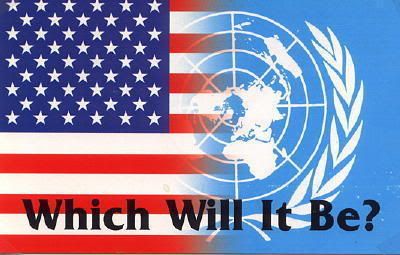
Showing posts with label communitarian values. Show all posts

Friday, June 6, 2008

Czech President Vaclav Klaus Has Long Warned Against Global 'Europeanism': But is the 110th U.S. Congress Listening? Does it Want This for America??

http://www.brusselsjournal.com/node/206

Czech President Warns Against “Europeanism”


From the desk of Paul Belien


The Brussels Journal


August 28, 2005


The most impressive speech during the recent Regional Meeting of the Mont Pelerin Society was undoubtedly Czech President Václav Klaus’s “View from a Post-Communist Country in a Predominantly Post-Democratic Europe.” Klaus has been an MPS member since 1990 and likes to attend the MPS meetings. Though his political obligations (as Prime Minister from 1992 to 1997 and President since 2002) do not always allow him to attend, he combined his presence at the MPS meeting in Reykjavik with an official visit to the Republic of Iceland.


Václav Klaus President Klaus spoke last Monday, warning for the new “substitute ideologies of socialism” such as “Europeanism” and “NGOism.” These “isms” are currently threatening Europe. “In the first decade of the 21st century we should not concentrate exclusively on socialism,” he said.


“There is a well-known saying that we should not fight the old, already non-existent battles. I find this point worth stressing even if I do not want to say that socialism is definitely over. There are, I believe, at least two arguments, which justify looking at other ideologies as well. The first is the difference between the hard and soft version of socialism and the second is the emergence of new ‘isms’ based on similar illiberal or antiliberal views.”


Václav Klaus is an indomitable defender of liberty, Europe’s only leader in the mould of the formidable Lady Thatcher. Though communism, the “hard version of socialism” is probably over this has not automatically led “to a system we would like to have and live in,” he said.


“Fifteen years after the collapse of communism. I am afraid more than at the beginning of its softer (or weaker) version, of social-democratism, which has become – under different names, e.g. the welfare state or the soziale Marktwirtschaft – the dominant model of the economic and social system of current Western civilization. It is based on big and patronizing government, on extensive regulating of human behavior, and on large-scale income redistribution.


[See, e.g., V. I. Lenin, Two Tactics of Social-Democracy in the Democratic Revolution, (Foreign Languages Press, Peking (c) 1965), at: http://images.google.com/imgres?imgurl=http://www.marx2mao.com/Lenin/L97p(249x312).GIF&imgrefurl=http://www.marx2mao.com/Lenin/TT05.html&h=312&w=249&sz=9&hl=en&start=3&tbnid=MyVOy8MeAhq96M:&tbnh=117&tbnw=93&prev=/images%3Fq%3Dsocial%2Bdemocratism%26gbv%3D2%26hl%3Den%26safe%3Doff ].


He urged the MPS members and all freedom loving Europeans “to understand this contemporary version of world-wide socialism, because our old concepts may omit some of the crucial features of what is around us just now. We may even find out that the continuous use of the term socialism can be misleading.”


“Illiberal ideas are becoming to be formulated, spread and preached under the name of ideologies or “isms”, which have – at least formally and nominally – nothing in common with the old-style, explicit socialism. These ideas are, however, in many respects similar to it. There is always a limiting (or constraining) of human freedom, there is always ambitious social engineering, there is always an immodest ‘enforcement of a good’ by those who are anointed (T. Sowell) on others against their will, there is always the crowding out of standard democratic methods by alternative political procedures, and there is always the feeling of superiority of intellectuals and of their ambitions.”


As substitutes of socialism, Václav Klaus cited “environmentalism (with its Earth First, not Freedom First principle), radical humanrightism (based – as de Jasay precisely argues – on not distinguishing rights and rightism), the ideology of ‘civic society’ (or communitarism), which is nothing less than one version of post-Marxist collectivism which wants privileges for organized groups, and in consequence, a refeudalization of society […], multiculturalism, feminism, apolitical technocratism (based on the resentment against politics and politicians), internationalism (and especially its European variant called Europeanism) and a rapidly growing phenomenon I call NGOism.”


“These alternative ideologies […] are successful especially where there is no sufficient resistance to them, where they find a fertile soil for their flourishing, where they find a country (or the whole continent) where freedom (and free markets) have been heavily undermined by long lasting collectivistic dreams and experiences and where intellectuals have succeeded in getting and maintaining a very strong voice and social status. I have in mind, of course, rather Europe, than America.


[BUT, FOLLOWING THE NOVEMBER 2006 U.S. CONGRESSIONAL ELECTIONS, IT WOULD APPEAR THAT AMERICA, AS WELL, UNDER DEMOCRATIC PARTY RULE, EMBRACES 'EUROPEANISM' AND 'SOFT SOCIALISM']


It is Europe where we witness the crowding out of democracy by post democracy, where the EU dominance replaces democratic arrangements in the EU member countries, where [some people] do not see the dangers of empty Europeanism and of a deep (and ever deeper) but only bureaucratic unification of the whole European continent. They applaud the growing formal opening of the continent, but do not see that the elimination of some of the borders without actual liberalization of human activities ‘only’ shifts governments upwards, which means to the level where there is no democratic accountability and where the decisions are made by politicians appointed by politicians, not elected by citizens in free elections.


The European constitution was an attempt to set up and consolidate such a system in a legal form. It was an attempt to constitute it. It is, hence, more than important that the French and Dutch referenda made an end to it, that they interrupted the seemingly irreversible process towards an ‘ever-closer Europe’.”


Václav Klaus called for a European political system not to be “destroyed by a postmodern interpretation of human rights with its stress on positive rights, with its dominance of group rights and entitlements over individual rights and responsibilities, and with its denationalization of citizenship.” He explicitly opposed the “weakening of democratic institutions, which have irreplaceable roots exclusively on the territory of the states,” as well as “the ‘multiculturally’ caused loss of a needed coherence of various social entities” and the “continental-wide rent-seeking made possible when decision-making is done at a level which is very far from the individual citizens and where the dispersed voters are even more dispersed than in sovereign countries.”


He also opposed “excessive government regulation” and “huge subsidies to privileged or protected industries and firms.” He warned that Europe’s social system “must not be wrecked by all imaginable kinds of disincentives, by more than generous welfare payments, by large scale redistribution, by many forms of government paternalism.” Instead, Europe has to “be based on freedom, personal responsibility, individualism, natural caring for others and genuine moral conduct of life.”


“[Europe] is a system of relations and relationships of individual countries, which must not be based on false internationalism, on supranational organizations and on misunderstanding of globalization and of externalities, but which will be based on good neighborliness of free, sovereign countries and on international pacts and agreements.”


President Klaus’s speech was spot on. One rarely hears a politician outlining in such poignant and clear words the problems of our times that others dare not mention out of fear of being “politically incorrect.” It reminded us of Margaret Thatcher’s seminal “Bruges Speech” on 20 September 1988.


Mr. Klaus’s Reykjavik MPS speech of 22 August can be found in full on his website. The Brussels Journal has recorded the speech on audiotape from within the conference room. It can be downloaded here (see "attachments" at the bottom of this article).

Saturday, April 19, 2008

If Gordon Brown Insists that the US Buy Into Global Governance, Then This Can Only Be Done at American Constitutional Standards

http://usvisit.pm.gov.uk/2008/04/18/keynote-foreign-policy-speech

http://video.aol.com/video-detail/british-pm-browns-speech-at-the-jfk-library/2454956070 (video of Gordon Brown’s Speech)


Keynote foreign policy speech


Friday 1:09 pm (BST-5) Boston


This is the full text of the Prime Minister’s Kennedy Memorial lecture.


Kennedy Memorial lecture


The Rt Hon Gordon Brown MP


Prime Minister of the United Kingdom


18th April 2008


It is a great privilege to be here in Massachusetts, in Boston, and to be present with such distinguished guests in this library where history comes alive and values endure.


And a privilege too to be introduced by Senator Kennedy —– and I cannot speak too highly of the legislative record of Senator Kennedy who has served in the Senate for almost a quarter of the Republic’s life, earned his place as one of the greatest Senators in more than two centuries, and for its record of public service the Kennedy family is respected and renowned not just in this continent but in every continent of the world.


In the years since John F Kennedy’s Presidency:


· man has walked on the surface of the moon - directly as a result of his commitment, made on 25th May 1961;
· the Berlin Wall that he so famously denounced has been reduced to rubble – the Cold War ended, freeing eastern Europe, and making Europe whole again;
· and Nelson Mandela has walked free and apartheid – which John Kennedy denounced as ‘repugnant’ – has been swept away.


Great events, once the vision of one man - now landmarks in the history of the world.


And although he was President for less than three years I believe that the much of the progress of this half century has been testament to the scope of John Kennedy’s dream, the worth of the ideals he lived for, the breadth of hope he inspired in us, and most of all - amid all the wit, style, elegance and statesmanship that adorned the Kennedy Presidency - his summons to service —- one that never fails to inspire people to see farther and reach higher, a call which still reverberates around the world and always will. And his influence for good is so powerful that as Pericles said in ancient times even when he has left this world his influence ‘abides everywhere…woven into the stuff of other men’s lives’.


And although it is perhaps risky for a British Prime Minister to come to speak in Boston shortly before Patriots Day, I am pleased that over the past half century the special relationship between America and Britain which John Kennedy prized remains strong and enduring —- so firmly rooted in our common history, our shared values and in the hearts and minds of our people that no power on earth can drive us apart.

Nothing in President Kennedy’s enduring legacy has greater importance now - at the beginning of the 21st century - than his words on your Independence Day in 1962 when he proposed a new and global declaration of interdependence.


‘Today Americans must learn to think inter-continentally’ he said. ‘Acting alone by ourselves [America] cannot establish justice throughout the world. We cannot ensure America’s domestic tranquillity; provide for its common defence; or promote its general welfare; or secure the blessings of liberty to ourselves and our posterity. But joined with other free nations we can do all this and more’.


So if the 1776 Declaration of Independence stated a self evident truth - that we are all created equal – JFK’s Declaration of Interdependence in 1962 added another self-evident truth: that we are all of us - all of us throughout the world - in this together. Each of us our brother’s keeper, each of us - to quote Martin Luther King - part of an inescapable web of mutuality.


Yet no-one in 1962 could have foreseen the sheer scale of the new global challenges that our growing interdependence brings: their scale, their diversity and the speed with which they have emerged:


· the globalisation of the economy;
· the threat of climate change;
· the long struggle against international terrorism;
· the need to protect millions from violence and conflict and to face up to the international
consequences of poverty and inequality.


Challenges that all point in one direction – to the urgent necessity for global cooperation. For none of them - from economy to environment - can be solved without us finding new ways of working more closely together.


To recognize this is important. But simply to acknowledge that there are no ‘Britain-only’ or ‘Europe-only’ or ‘America-only’ solutions to the global threats and challenges we face - or to say we are all internationalists now - will change nothing in itself.


Instead, we must go much further: acknowledging that our common self-interest as nation states can be realised only by practical cooperation; that ‘responsible sovereignty’ means the acceptance of clear obligations as well as the assertion of rights.


And my argument today is simple:


· global problems require global solutions;


· the greatest of global challenges demands of us the boldest of global reforms;


· the most urgent of tests demand the broadest of global cooperation;


· and to address the worst evils of terrorism, poverty, environmental decay, disease and instability, we urgently need to step out of the mindset of competing interests and instead find common interests – summoning up the best instincts and efforts of humanity in a cooperative endeavour to build new international rules and institutions for the new global era.


[GORDON BROWN SETS FORTH THE MALTHUSIAN SOCIALIST'S 'TOP-TEN' LIST OF THREATS TRIGGER BY 'MARKET FAILURES' TO JUSTIFY A TOP-DOWN UN CENTRALIZED GLOBAL LEGAL, ECONOMIC & POLITICAL GOVERNANCE]


Let me sketch out the challenges we face, the new directions I favour and the solutions I propose.


[1] The first - and perhaps because of the credit crunch the most immediate - challenge is economic globalisation itself.


And does not the recent sharp and still unresolved credit crunch which has affected the whole world now demonstrate that with global flows of capital already replacing the old national flows and global sourcing of goods and services replacing the old local sourcing, national systems of supervision and economic management are simply inadequate to cope with the huge cross-continental flows of capital in this interdependent world?


But is not the issue even bigger than that? That we are seeing in the scale, scope and speed of globalisation the biggest restructuring of economic life since the industrial revolution. Already Asia is manufacturing more than Europe and soon America; China alone is producing half the world’s clothes and half the world’s electronics. And we are only at the beginning of this shifting balance of power as every day more and more of the 4 billion Asian people are entering the world’s industrial economy.


And the reality is that we are all affected now by what happens in Asia or Latin America or Africa. And if we do not work across countries and continents to create a globalisation that is inclusive for all, then not only will the poorest of the world who lose out react to being excluded, but people in our own countries will feel - as many do today - victims not beneficiaries of the process of change - losers and not winners - and protectionist sentiment will gain ground.


I am optimistic about the benefits of interdependence, and certain that globalisation need not be a zero sum game that says if China or India benefits America or Europe loses. Why? Because over the next 25 years we will see the world economy doubling in size, creating a billion new professional or skilled jobs worldwide, offering opportunity for any who have the creativity, ingenuity, skills and talent to benefit - a time of huge opportunity even if it is also a time of change and risk.


And in the spirit of John Kennedy who summoned us to think of how we can make our interdependence work for the benefit of all, I believe a new global deal is possible:


· in the industrial countries like ours a guarantee that even if we cannot keep people in their last job we can ensure people will be able to obtain the next job - through investment in skills and income support wherever necessary;


· and in the poorest countries a new deal that in return for opening up to trade, freeing regimes from corruption and a commitment to economic growth, we support the development of education, infrastructure and healthcare.


And the benefits will flow most widely and more effectively if instead of trying to pursue beggar-my-neighbour policies, or erecting national barriers to shelter people from change, we cooperate across frontiers to maximise the opportunities. But to do this we have no choice now – and his is my main argument - but to consider and agree new global rules and create new global institutions so that not some but all can benefit from change.


[2] And how do we face up to the second great global challenge? — that of climate change which is already creating the first climate change droughts, the first climate change evacuations, the first climate change refugees?


It is this challenge that starkly defines the most basic truth of our human condition: that, if as far ahead as we can foresee, there is no other planet for us and our children - we must cooperate to make our stewardship of this earth work.


So it will not be enough to discuss purely national initiatives or even to quarrel over the burden of sharing emission reductions while global warming continues unchecked. Because global problems cannot be solved without global solutions we need to join together in recognising that cooperation in an interdependent world means a single framework for global and national targets, and for the first time a truly global carbon market.


[PROOF THAT PROPONENTS OF TOP-DOWN UNITED NATIONS-CENTRED GLOBAL GOVERNANCE ARE USING THE ISSUE OF CLIMATE CHANGE TO CALL FOR NEW STRINGENT NON-SCIENCE AND NON-ECONOMICS-BASED PRECAUTIONARY PRINCIPLE REGULATIONS THAT WOULD REACH INTO THE UNITED STATES HEARTLAND AND RESHAPE, 'RENEW' AND 'CHANGE' ITS UNIQUE, INDIVIDUAL-BASED CONSTITUTIONAL LEGAL AND FREE MARKET ECONOMIC SYSTEMS SO THAT THEY MORE CLOSELY RESEMBLE EUROPE'S COMMUNITARIAN NAPOLEONIC CODE, WHICH TELLS PEOPLE WHAT THEY CAN AND CANNOT DO FOR THE SAKE OF THE COMMON GOOD.]


[3] A third force of globalisation is the sobering reality that has already struck home in both Britain and America: that we are exposed - unpredictably but directly - to the risk of violence and instability originating in failed and rogue states around the world. Once we feared rival nations becoming too strong; now the worst threats come from states that are too weak. And we know that the richest citizen in the richest country can be directly affected by what happens to the poorest citizen in the poorest country.


So today no country can say that failed or failing states are someone else’s problem. They are a problem for us all. Instability in one country affects stability in all countries; an injustice anywhere is now a threat to justice everywhere. And that is how we must respond: not walking away as we did in Rwanda at the cost of hundreds of thousands of lives, but by engaging as hard-headed internationalists - through diplomatic, economic, and yes when necessary military action - to prevent crimes against humanity when states can no longer do so.


Linked to failed and failing states is the spread of international terrorism, in the form of loosely affiliated global networks that threaten us and other nations across oceans and continents — and let me praise President Bush for leading the world in our determination to root out terrorism and our common commitment that there be no safe haven for terrorists.


Where once we imagined that nuclear or biological weapons were a state monopoly, now there is the prospect of hidden unofficial arsenals in the hands of terrorists. And to counter such threats effectively we must work together across national borders.


We will at all times be steadfast and resolute against terrorism at home and abroad using all our resources - military, security, policing, intelligence – to expose and defeat terrorists. And vitally in this struggle we must mobilise the power of ideas, of shared values and of hopes that can win over hearts and minds.


Just as importantly, we must recognize that our enemy, as George Marshall put it in a great speech in Boston sixty years ago, will never be just one country but ‘hunger, poverty, desperation, and chaos’. And while today many millions live well, we have 2.5 billion neighbours who subsist on less than 2 dollars a day: a fact that demonstrates what Winston Churchill once called ‘the gaping sorrows of the left out millions’.


And ours is already a world where no ‘us’ - however rich or influential - can pull up the drawbridge in an attempt to gain protection from a ‘them’


New contagious diseases can advance swiftly from the national to the global with all the speed of international air travel.


And as global transport networks and global communications erode or abolish traditional frontiers, national crime all too readily becomes international crime.


So global neighbours are closer than ever before - and we to them. And the critical question is this: how we plan and act together across continents to tackle disease, crime, mass migration and mass poverty?


And we must recognise too that our interdependence in the economy, environment, security, poverty, disease and crime is now underpinned by the truly revolutionary impact of advancing technology whereby a device on a desk or in the palm of our hand puts us in contact with anyone, anywhere, anytime. It is a revolution that is rewiring, multiplying and accelerating social, economic, and political connections within and between our nations, to their total and irreversible transformation. A revolution which potentially transforms democratic life and means the world can never be the same again.

[THIS IS A NUANCED REFERENCE TO THE NEED FOR OBAMA-TYPE 'CHANGE' WHICH LEAVES BEHIND AMERICANS' CONCEPTIONS OF INDIVIDUALISM, FREE MARKETS, AND U.S. CONSTITUTIONALLY GUARANTEED RIGHTS, ESPECIALLY TO PRIVATE PROPERTY. ONE NEED ONLY LOOK AT HOW GORDON BROWN IGNORED THE WISHES OF THE BRITISH PEOPLE TO HOLD A REFERENDUM ON THE REFORM EU CONSTITUTION/ TREATY - HE BASICALLY OVERRODE THEIR DUE PROCESS RIGHTS!! NOW HE & HIS EUROPEAN COLLEAGUES WANT THE AMERICAN DEMOCRATIC PARTY, SHOULD THEY SECURE THE U.S. PRESIDENCY, TO DO THE SAME - i.e., TO REINTERPRET OR OTHERWISE BURN THE CONSTITUTION IN FAVOR OF A NEW GLOBAL VISION/MISSION. AMERICANS HAVE A RIGHT TO KNOW WELL BEFORE THE PRESIDENTIAL ELECTIONS].


A few years ago in regime after regime sentries could stand over fax machines as governments sought to deny information to their peoples. Today - as we have seen in Burma - pictures of repression sent across the internet can alert the whole world; and - as we saw in the Philippines - one million people exchanging text messages on mobile phones brought down a country’s leader —- what was called the first ‘coup de text’.


So the dawn of the digital age is enabling people to become the authors of change rather than its subjects, the agents of history rather than its victims. And within a decade or two, it will create a virtual world of individuals speaking instantly across once virtually impassable distances, communities springing up across the internet, a rising sense of global consciousness of millions of global citizens in the making.


To adapt an aphorism of President Kennedy, the new frontier is that there is no frontier…


· no frontier for the internet, for the mobile phone, for e-mails, for the cyber-world;
· no frontier for the capacity of individuals to influence, inform or even infuriate each other.


And because times are new, we must - in Robert Kennedy’s words -think anew. We must, as he said, leave behind yesterday and embrace tomorrow.


So while in President Kennedy’s time foreign relations were founded almost exclusively on the relative power of governments, today we must recognise the relevance to foreign policy of what we see before our eyes:


· that everywhere around us people are forming global associations, global connections and global communities;

· that all over the world from culture to education to social action individuals are harnessing people power to transcend states – for good, and sometimes for ill;

· and they are compelling institutions and authorities to follow their example — with regulators, environmental and development agencies, militaries, law enforcement and judges all having to cooperate directly across frontiers.


As greater people power drives forward the creation of this new world order, foreign policy has increasingly to be explained daily to a questioning public who will increasingly also demand to know the basis on which we act.


And if in the 18th and 19th centuries nation states looked to the concept of the balance of power for their security - and in the latter half of the 20th briefly put their faith in the concept of mutually assured destruction - we, amid the emerging complexities of the 21st century, must recognize afresh the power of John Kennedy’s Declaration of Interdependence. And must firmly root our international system in the values we hold in common — shaping more than a new world order, creating instead a truly global society:


· a global society no longer just based on the power of states delineated by borders but on the aspirations of people that transcend borders;

· a global society no longer founded just on balancing competing interests but on building institutions that foster mutual interests because they are grounded in common values.


Indeed I would go further: in democracies such as ours - and now in a global society where people can communicate, lobby, petition and express and organize their views freely across continents - acting upon our interdependence demands that we found our cooperation and build alliances upon those enduring and humane values we share in common —– values that emphasise at all times the dignity and liberty of the individual, the indispensability of justice within and between nations, and our responsibilities as citizens of both our own nation and of the world.


Throughout history we have too often allowed ourselves to believe that the foreigner was at best a stranger and at worst an enemy; that across national borders our ethical values could be as different as our cuisine or fashion or language. In fact, the more we discover about each other the more we find how often we subscribe to similar ideals - regardless of geography, history or identity.


For through each of our diverse heritages there runs a single, powerful moral sense: one that is reflected and replicated throughout the world’s great religions and also in the moral philosophy of those who adhere to none that shows we are not moral strangers but there is a moral sense common to us all.


When Christians say: ‘do to others what you would have them do to you’;

When Muslims say: ‘no one of you is a believer until he desires for his brother that which he desires for himself’;

When Jews say ‘what is hateful to you, do not to your fellow man’;

When Hindus say ‘this is the sum of duty: do naught unto other which would cause pain if done to you’;

When Sikhs say ‘treat others as you would be treated yourself’;

When Buddhists say ‘hurt not others in ways that you yourself would find hurtful’;
….they reflect a common truth dear to billions of adherents of those and other religions that is true also of all the great secular thinkers: that we not only cooperate out of need but there is a human need to cooperate; and that cooperation is built on the desire for liberty and the call to justice: respect for the dignity of every individual and our sense of what is equitable and fair.


Call it as Lincoln did ‘the better angels of our nature’;

Call it as Winstanley did ‘the light in man’;

Call it ‘our moral sentiment’ as Adam Smith did;

Call it conscience;

Call it the moral sense;


it is on the basis of our common humanity and common values that that even people thousands of miles apart can share the pain of others and believe in something bigger than themselves. And it is for our generation to bring to life these shared values - which already have the capacity to unite people across the world - in proposals to create the architecture of a global society.


[THIS IS THE SAME AS THE 'COMMON HERITAGE OF MANKIND' DOCTRINE EMBEDDED IN THE UNITED NATIONS LAW OF THE SEA CONVENTION, WHICH ESTABLISHES A 'GLOBAL COMMONS' THAT IS TO BE REGULATED BY A TOP-DOWN, UNITED NATIONS-CENTRED BODY]


Acting upon our interdependence does not mean a new version of the old balance of power arrangements based on opposing powers bargaining for their own narrow advantage.


[THIS IS THE SAME THING AS SAYING THAT INDIVIDUAL PRIVATE PROPERTY RIGHTS SHOULD NO LONGER BE BASED ON THE NOTION OF 'NEGATIVE' RIGHTS, EXISTING IN OPPOSITION TO AND AS AGAINST BOTH THE SOVEREIGN AND OTHER PROPERTY OWNERS & CITIZENS, BUT RATHER ON THE NOTION OF 'POSITIVE' PROPERTY RIGHTS WHICH ARE GRANTED, SHAPED AND LIMITED BY THE SOVEREIGN FOR THE SAKE OF THE COMMUNITY - IN THIS CASE, NOT THE NATIONAL COMMUNITY, BUT THE GLOBAL COMMUNITY.]


But nor does it mean abandoning national interests. Instead, the very fact of interdependence requires nations to work out new ways of working founded on the recognition that they can best pursue their national interests by invoking broader global alliances – and that these global alliances must be grounded in shared global goals and globally agreed rules and institutions.


[OBVIOUSLY, MR. BROWN AND HIS FELLOW EUROPEAN SOCIALISTS ARE SENSITIVE TO THE ACCUSATION THAT THEY WISH TO DO AWAY WITH NATIONAL SOVEREIGNTY, BECAUSE THAT ARGUMENT CAN CAST A DEATH KNELL OVER THEIR GLOBAL GOVERNANCE PLANS - READERS MUST CAREFULLY SCRUTINIZE THE WORDS USED BY MR. BROWN AND HIS COLLEAGUES. AS THE FRENCH SAY, WHAT IS STATED IS IMPORTANT; BUT WHAT IS NOT STATED IS EVEN MORE IMPORTANT, BECAUSE ACCORDING TO FRENCH LOGIC, IF SOMETHING IS NOT STATED, IT IS PERMISSIBLE.]


There have been four great moments in the modern age when statesmen have come together to reorder the world:


· in 1648: in the Westphalia Treaty that followed Europe’s catastrophic Thirty Years War;
· in 1815: at the congress of Vienna after the Napoleonic wars;
· and twice in the last century: disastrously in 1919 at Versailles and - most significantly - in the late 1940s when, in a world wracked by total war, new global arrangements were agreed.


At that time - and in a breathtaking leap forward into a new world order – American visionaries helped form the United Nations, the World Bank, the International Monetary Fund; and they put in place a policy of unprecedented generosity - the Marshall Plan - which transferred 1 per cent of America’s national income each year for four years to the war ravaged economies of Europe —– and saved the free world.


[BUT AMERICAN VISIONARIES NEVER, NEVER INTENDED FOR THE U.S. TO SURRENDER IS NATIONAL CONSTITUTIONAL SOVEREIGNTY TO THE UNITED NATIONS!!]


Such was the impact of what they did for their day and age that Dean Acheson spoke of being ‘present at the creation’. And in a new era when the challenges of 2008 are different from those of 1945, we must summon inspiration from the vision, humanity and leadership shown by those reformers to guide our actions today.


And this is no longer an academic debate that can wait because change is too difficult to implement; or because we must consider at length what is to be done – with a view to doing nothing.


This is urgent. And the challenge is far reaching.


[MR. BROWN IS CORRECT IN SAYING THAT THE DISCUSSION ABOUT WHETHER THERE EXISTS AND SHOULD BE A MOVEMENT TOWARDS GLOBAL GOVERNANCE IS NO LONGER ACADEMIC - IT IS NOW OUT IN PUBLIC VIEW FOR ALL AMERICANS TO SEE. BUT, MR. BROWN IS INCORRECT IN SAYING THAT URGENT ACTION IS REQUIRED AND THAT DOING NOTHING IS NO LONGER ACCEPTABLE; RATHER, DOING NOTHING IS OFTEN THE BEST COURSE OF ACTION WHEN THE LEGAL, ECONOMIC & POLITICAL CONSEQUENCES OF DOING SOMETHING ARE UNCERTAIN, SWEEPING AND VERY EXPENSIVE. DEAR MR. BROWN, THE SUCCESS OR FAILURE OF THE EU EXPERIMENT IS STILL UNKNOWN, AND YET YOU AND YOUR FELLOW EUROCRATS INSIST THAT THE WORLD FOLLOW IN ITS PATH.]


The great Bostonian Emerson not only summed it up when he said: ‘what lies behind us and what lies before us are tiny matters compared to what lies within us’, but also warmed us of the radical consequences that follow: ‘do not go where the path may lead, go instead where there is no path and leave a trail’.


Those who build the present only in the image of the past will - in the words of Winston Churchill - miss out entirely on the opportunities of the future.


And when he warned of countries facing change who were too timid that they were ‘resolved to be irresolute, adamant for drift, solid for fluidity, all powerful to be impotent’, it is a powerful reminder of the need to act now.


First, a global society must embody and enact our obligations to each other not just within borders but across borders.


So I am proposing today reforms that will enable our international and regional institutions to do what they failed to do in the Rwandan genocide 15 years ago and are even now still failing to achieve amidst the tragedy of Darfur: to prevent conflict, to stabilise and then to reconstruct failing and failed states; and specifically to shield men, women and children who are being threatened by genocide, ethnic cleansing, war crimes or crimes against humanity. And so the United Nations must become a consistent defender of the interests of the world’s people – not simply those of states.


And this means new actions to prevent and respond to the breakdown of states and societies by:


· helping vulnerable nations develop the capacity to uphold the rule of law, by encouraging civil society, training police and security forces;


· more systematic use of earlier Security Council action including targeted sanctions and, as a last resort, the threat - and if necessary the use - of military force;

· new resources in the form of a UN crisis recovery fund to ensure proper financing for
stabilisation and reconstruction in countries emerging from conflict;

· and new encouragement for regional organisations from the African Union to the European Union to mount peace, stability and reconstruction efforts.


[PERHAPS MR. BROWN AND HIS EUROPEAN COLLEAGUES FEEL THE COLLECTIVE GUILT OF HAVING PILLAGED MOST OF THE AFRICAN SOCIETIES, THEY PREVIOUSLY HAD COLONIZED, HAVING LEFT THE AFRICAN PEOPLES WITH BARELY ANYTHING RESEMBLING A FREE, ENLIGHTENED AND DIGNIFIED EXISTENCE. IS MR. BROWN NOT RESTATING WHAT 19TH CENTURY REFERRED TO AS THE 'WHITE MAN'S BURDEN'???]


In 1960 President Kennedy called for an American peace corps - harnessing the idealism Americans felt in the face of deprivation and underdevelopment. Today in the same spirit we should create a new kind of global peace and reconstruction corps - an international stand-by capacity of trained civilian experts, ready to go anywhere at any time to help rebuild states.


Second, I favour strengthening the role of international institutions in ensuring a unified global response to terrorism - through asset freezes, travel bans, proscriptions, raising international legal standards, and unflagging resistance to extremist ideologies – measures led by President Bush as we discussed yesterday. But as he and I agree terrorism will ultimately be defeated only when it is isolated and abandoned.


So I propose a new cultural effort on the scale of the cultural Cold War in the ’40s, ’50s and ’60s: an initiative that involves foundations, charities, faith groups, elders and young people — and engages TV, radio, the internet and all forms of multimedia communication across all cultures, faiths and tongues to make the case for democracy and respect for human rights: how these offer the best future for us all; and how - in the face of these arguments - violent extremism is both unnecessary and wrong.


We will support interfaith dialogue in every part of the world. And with people power in a global society already advancing democracy widely across the world - from 20 per cent of nations being democratic in the early 1970s to 60 per cent today - we must encourage the development of the daily accountability, transparency and responsiveness and the civil societies which are at the heart of true democracies.


Third, a global society demands new global agreements and strengthened global institutions to protect and safeguard essential global resources.


So by the end of next year we must secure a new global climate change agreement – with the UN at its centre - with binding targets for all developed countries, including America and Britain. I want to see at least a halving of global emissions by 2050. And we need new incentives for developing and emerging economies - helping them slow their growth in emissions through new flows of finance and technology.


A global agreement is more than a set of targets: it must include an international carbon market as the surest and most efficient way to achieve our aims — eventually generating up to $100 billion dollars a year to fund ‘green’ development.


[UN-BROKERED, EU SUPPORTED CLIMATE CHANGE CHICANERY]


And while we strengthen the World Bank’s focus on poverty reduction, I have a radical proposal to make the World Bank a bank for development and the environment — transferring billions in loans and grants to encourage the poorest countries to adopt alternative sources of energy and in doing so ensuring that its development programmes provide an integrated approach to both poverty eradication and global warming.


We require a similar global coordination of effort on food where we face the worst food shortages for decades. And on disease and global pandemics where - led by the World Health Organisation - the priority is to improve early warning, increase the stocks of global vaccine supplies and develop a more coordinated global response. We need now to ensure there are clear responsibilities and decision-making procedures at every level. And Britain will bring together all interested parties to agree the new international action that is now essential to prevent pandemics and the spread of ill health.


Globalisation can work if it is an inclusive globalisation and protectionism can be avoided only by means of open economies, free trade and flexibility accompanied by policies for fairness and justice - policies that include investment in education and other social goods in the industrialised countries and a new deal for the poorest countries.


[MR. BROWN ALLUDES TO WEALTH-REDISTRIBUTION ORIENTATED TRADE AND TECHNOLOGY POLICIES THAT UNDERMINE U.S. SOVEREIGNTY, ECONOMIC & TECHNOLOGY COMPETITIVENESS, AND FURTHER DRAINS U.S. JOBS - EXCEPT THOSE RELATING TO AN INTERNATIONAL UN-BASED PEACE CORPS.]


And my proposal here is that we set new global rules for a new 21st century global economic system with:


· a global trade deal that benefits rich and poor countries alike;

· new international financial architecture and economic institutions that end the mismatch between global capital flows and only the national supervision of them — with the IMF an early warning system for the global economy, focused on crisis prevention rather than just crisis resolution;

· and a new deal as bold as the Marshall Plan of the 1940s between rich and poor under which as developing countries open up to trade, address corruption and pursue policies for economic development and developed countries agree to make available new resources so that we can say of this generation: the preventable diseases of TB, polio and malaria are eradicated and for the first time in our history every child enjoys education.


And let me just explain why it is so important. When I visited Abuja in Nigeria I found that side by side with a dilapidated school that we did not support enough was a madrassas where Al Qaeda inspired extremists were enticing children into their school offering free high standard schooling – so our offer of education for all is not just an education and economic policy for the developing world it is a defence and security policy for the developed world.


So a new World Bank; a new International Monetary Fund; a reformed and renewed United Nations mandated and resourced that is greater than the sum of its parts; strong regional organisations from the European Union to the African Union able to bring to a troubled world the humanitarian aid, peacekeeping and the support for stability and reconstruction that has been absent for too long — all built around a new global society founded on revitalised international rules and institutions, and grounded in the great values we share in common.


[MR. BROWN & HIS EUROCRAT/UN BUREAUCRAT COLLEAGUES WANT AMERICA TO KISS 'GOODBYE' ITS UNIQUE CONSTITUTION, WHICH PROTECTS INDIVIDUALISM, 'NEGATIVE' PRIVATE PROPERTY RIGHTS, FEDERALISM, BALANCE OF POWERS, GOVERNMENT ACCOUNTABILITY, DUE PROCESS OF LAW (INNOCENCE UNTIL PROVEN GUILTY), AND U.S. NATIONAL SOVEREIGNTY.]


And during the year to come I want this debate about change to become a global dialogue about renewal as we embark upon a task perhaps more ambitious than even the Bretton Woods Conference in 1944.


Already the Commonwealth of 53 nations has agreed to convene a task force on these issues, the first meeting in London in June.


[THE COMMONWEALTH OF NATIONS IS AN ASSOCIATION OF 53 INDEPENDENT SOVEREIGN STATES, MOST OF WHICH ARE FORMER BRITISH COLONIES. See:
The Commonwealth Secretariat, at: http://www.thecommonwealth.org/Internal/20596/about_us ].


Reform and renewal should feature on the G8 and EU agendas.


I welcome Harvard University’s interest in taking forward work on the proposals.
I suggest next year a series of international conferences and meetings to agree how to transform these ideas into real change.


And we must engage business, NGOs, faith groups and individuals from all nations and continents in these debates.


American leadership is and will be indispensable. And now is an opportunity for an historic effort in cooperation: a new dawn in collaborative action between America and Europe – a new commitment from Europe that I believe all European leaders can work with America to forge stronger transatlantic links. For I sense common ground between our two great continents in the urgent need for renewal and reform.


[THIS STATEMENT IS FOR OBVIOUS USE BY PRESIDENTIAL CANDIDATES CLINTON & OBAMA]


And I also sense that this is the moment to bring in China, India, South Africa, Mexico, Brazil and other emerging countries to the heart of this debate – offering a greater role with the G8, to offer them more say in the IMF and World Bank, and to reform the security council of the United Nations.


Today - as we face these new global challenges - the tantalizing possibilities of a world where, as John Kennedy put it, the strong are just, the weak secure and the peace preserved are matched only by the terrifying risks of us failing to seize this moment.


For the first time in human history we have the opportunity to come together around a global covenant, to reframe the international architecture and build the truly global society. So today my call is not just to the public purpose of this generation but to the idealism of this and the next generation.


[THIS IS AN ALL-OUT ATTEMPT TO APPEAL TO AMERICA'S YOUTH IN ORDER TO 'RE-PROGRAM' AND RE-ORIENTATE THEM AGAINST THE CONCEPT OF U.S. NATIONAL SOVEREIGNTY WHICH, ACCORDING TO EUROPEAN ELITES AND UN BUREAUCRATS, IS CONSIDERED AN IMPEDIMENT TO GLOBAL PEACE, PROSPERITY, MORALITY & CIVITAS, IN FAVOR OF GLOBAL GOVERNANCE.]


History is not destiny. It is the sum total of the choices of each generation — the record of the vision of those who imagined and could see a better future, and believed they could touch the stars.


And if the 19th century became known as the century of industrialisation and the 20th century became defined as the century of world wars, the 21st century can be the first progressive century in which we created the first truly global society.


Forty years ago this year amidst tragedy and grief America lost two towering visionaries - Martin Luther King in April and Robert Kennedy in June.


Both of them refused to accept that the way things are is the way things must be and the way things must stay;

Both of them were men of conscience and courage who turned history in the direction of our best hopes;

Both of them believed in essential truths that I am celebrating today - that peace and prosperity are indivisible, that prosperity to be sustained has to be shared; and believed too that the greatest of social changes are built on the strongest of ethical foundations.


And when today cynics dismiss as and impossible dream or naïve idealism proposals to create the institutions of a truly global society let us remind them that people used to think black civil rights a distant dream, the end of the cold war an impossible hope, the ending of apartheid in our generation the work of dreamers, debt relief for the poorest countries an unrealisable idea.


It is fitting that this library - standing at the edge of the sea - is shaped like a great sail. For those it memorialises, to paraphrase Robert Kennedy, truly did send forth ‘ripples of hope’ that continue to move across history as a mighty wave.


And so let us have confidence we can discover anew in ourselves the values we share in common, let us have confidence we can act upon John Kennedy’s declaration of interdependence, and let us have confidence we can create a global covenant across nations to make peace and prosperity real in our generation.

Sunday, April 13, 2008

US Constitutional Due Process Protections Do Not Exist in the European Union: You Are Guilty Until Proven Innocent! Why Then, Harmonize With EU?

[READERS SHOULD BE AWARE THAT THE 2008 U.S. PRESIDENTIAL & CONGRESSIONAL ELECTIONS WILL ACTUALLY SERVE AS A PLEBISCITE TO DETERMINE WHETHER THE U.S. SHOULD FURTHER HARMONIZE ITS CONSTITUTIONAL & STATUTORY LAWS WITH THOSE OF EUROPE AND THE REST OF THE WORLD. IF EUROPE IS A 'STRONG DEMOCRACY', RELATIVELY SPEAKING, THAT LACKS CONSTITUTIONAL DUE PROCESS OF LAW AT U.S. STANDARDS, WHICH, AMONG OTHER THINGS, REQUIRES PROBABLE CAUSE BEFORE THE ISSUANCE OF A WARRANT, AND A PRESUMPTION OF INNOCENCE UNTIL ONE IS PROVEN GUILTY, WOULD THEN, SUCH HARMONIZATION ACTUALLY BE IN THE BEST INTERESTS OF AMERICAN CITIZENS???]


http://www.mondaq.com/article.asp?articleid=56284


European Union: European Commission Raids Pharmaceutical Companies To Start Sector Inquiry


18 January 2008


Article by Jonathan Gowdy and Peter J. Edlind


On January 16, 2008, the European Commission launched a sector inquiry into the pharmaceuticals industry by carrying out a series of unannounced inspections of innovative and generic pharmaceutical companies. The targeted companies include both European and U.S. pharmaceutical companies with significant operations in Europe. The inquiry is likely to implicate important and controversial issues regarding the intersection of competition and intellectual property law, including the legality of patent litigation settlement agreements and conduct relating to the procurement and enforcement of intellectual property rights.


The sector inquiry is generally designed to provide the Commission with insight into commercial practices within the pharmaceutical industry; however, it was launched in response to the Commission’s concern that competition in the European pharmaceutical sector may not be working as it should. Specifically, the Commission noted that there has been a significant decrease in novel and generic medicines for human consumption entering the European pharmaceutical market in recent years.


The sector inquiry also follows two recent and significant enforcement actions by the Commission against firms in the pharmaceutical sector. In 2005, the Commission fined AstraZeneca €60 million for providing misleading representations to patent offices in the EU, and thereby restricting the entry of generic medicines to the market. Last year, the Commission also started proceedings against Boehringer for alleged misuse of the patent system to exclude competition in the area of chronic obstructive pulmonary disease drugs.


The Commission’s sector inquiry will focus on similar business practices; indeed the Commission’s announcement indicated it would examine whether the investigated parties’ exercise of patents and agreements between competitors, such as terms for litigation settlement agreements, are compatible with the EC Treaty’s rules on restrictive business practices. In addition, the inquiry will examine potential abuses of dominant position by market actors, including possible misuse of patent application procedures or frivolous lawsuits to prevent or deter launches of generic alternatives.


Enforcement actions in the United States on patent settlement agreements have proven controversial and even resulted in policy disagreements among the two U.S. antitrust agencies (i.e., the Department of Justice and the Federal Trade Commission) about the proper application of the antitrust laws. In addition, antitrust claims in the U.S. based on frivolous litigation or misuse of the patenting process generally must satisfy a high standard of proof. Thus, if the Commission’s sector inquiry results in any enforcement actions, they are likely to generate significant debate.


[DEAR EUROPEAN COMMISSION, WE IN AMERICA REFER TO THE SO-CALLED 'HIGH STANDARD OF PROOF' AS CONSTITUTIONAL DUE PROCESS OF LAW]


Finally, this sector inquiry is also notable because it is the first in which the Commission commenced the inquiry with dawn raids. (The Commission has in recent years carried out sector inquiries in the telecommunications, energy and financial services sectors, but all of these were initiated by sending out questionnaires to the targeted companies.) According to the Commission, the motivation to secure information in this manner stemmed from the fact that the information sought is usually considered by companies to be highly confidential and "may also be easily withheld, concealed or destroyed."


The Commission also recently used dawn raids in a merger investigation to investigate whether parties had integrated their business operations prior to obtaining clearance under the EU’s merger control regulations. It remains to be seen whether the Commission will continue to expand the use of dawn raids in non-cartel investigations; however, firms should ensure that their employees and in-house legal department are prepared for such an event.


The first results of the pharmaceutical sector inquiry are expected to be published in an interim report by the Commission this autumn and a final report due in the spring of 2009. Any subsequent competition law enforcement actions by the Commission (or EU member state competition authorities) against individual companies would be launched outside the framework of the sector inquiry.


Because of the generality of this update, the information provided herein may not be applicable in all situations and should not be acted upon without specific legal advice based on particular situations.


© Morrison & Foerster LLP. All rights reserved

-------------------------------------------------------------------------------------------------

http://www.ft.com/cms/s/0/4da369fa-c49e-11dc-a474-0000779fd2ac.html?nclick_check=1


Big drug companies raided in EU probe


By Andrew Jack in London and Tony Barber in Brussels


Published: January 17 2008 02:00 Last updated: January 17 2008 02:00


European regulators raided some of the world's biggest pharmaceutical companies yesterday in an inquiry into whether they conspired to keep up the price of drugs after patents expired.


Pfizer, GlaxoSmithKline, AstraZeneca and Sanofi-Aventis were among those that confirmed they had been visited as part of a European Commission-led probe into delays in the launch of low-cost generic drugs. Teva, the world's biggest generics company, was also targeted.


The inquiry will focus on whether the industry has abused patent rights to delay the introduction of low-cost generic alternatives. It will assess whether companies have made spurious attempts to extend the life of intellectual property rights or cut deals with one generic rival to the exclusion of others.


[WELL, THAT CERTAINLY JUSTIFIES SUSPENSION OF DUE PROCESS, DOESN'T IT!!]


The EU is increasingly concerned about the rising cost of medicines and declining innovation.


[WHY NOT THEN, PROVIDE A LEGAL ENVIRONMENT THAT PROMOTES MARKET-BASED INNOVATION, TECHNOLOGY TRANSFER AND COMMERCIAL LICENSING AND REDUCES NEEDLESS BUREAUCRATIC REGULATORY COSTS??]


Neelie Kroes, competition commissioner, said: "If we have the feeling that something is rotten in the state, then let's take the opportunity to find out."


[MS. KROES ACTS MORE LIKE A REGULATORY DICTATOR THAN A DIRECTOR - IS THE BUREAUCRATIC POWER GETTING TO HER HEAD??]


The raids, which began on Tuesday, broke with Commission practice in that no advance notice was given. Previous sectoral inquiries were launched with questionnaires sent to companies.


"It's certainly novel and rather aggressive, even. Dawn raids presuppose that the Commission has got a whiff of something they want to investigate," said one Brussels-based lawyer specialising in competition issues.


Europeans spent €200bn (£150bn) a year on pharmaceuticals, or €400 each, Ms Kroes said.


"If innovative products are not being produced, and cheaper generic alternatives to existing products are in some cases being delayed, then we need to find out why and, if necessary, take action," she added.


[SOUNDS LIKE THE EUROPEAN COMMISSION IS ORDERING PHARMACEUTICAL COMPANIES TO PRODUCE INNOVATIVE HEALTH CARE PRODUCTS. SOUNDS LIKE THE 4TH REICH!!]


The Commission stressed that its visits were the starting point for a broad inquiry, rather than a response to "positive indications of wrongdoing" by the targeted companies. It said that the "unannounced inspections" were designed to gather "highly confidential . . . information [which] may also be easily withheld, concealed or destroyed".


[THIS ACTUALLY SOUNDS LIKE A 'FISHING EXPEDITION'. DOES THE EUROPEAN COMMISSION HAVE WHAT WE CALL IN THE UNITED STATES, 'PROBABLE CAUSE'???]


The inquiry is set to issue interim findings by the autumn and final results in spring 2009. It will examine whether pharmaceutical practices infringe EU treaty prohibitions on restrictive practices.


The generic drugs industry, which produces cheaper but chemically identical versions of medicines once their patents expire, has long accused innovative drug manufacturers of "ever-greening", or using spurious grounds to delay competition by extending their exclusive intellectual property rights.


[OF COURSE THEY HAVE! THEY'RE IN COMPETITION WITH THE BRAND NAME COMPANIES!! THEY WANT WHAT THOSE COMPANIES HAVE, FOR FREE!]


Pfizer, GSK, Teva, Sanofi-Aventis, AstraZeneca, Boehringer-Ingelheim and Merck of the US all confirmed that they were contacted by commission officials. Most would make no further comment. "We are co-operating with the inquiry," said AstraZeneca.

-------------------------------------------------------------------------------------------------

http://www.ft.com/cms/s/0/eb99c8a8-c49d-11dc-a474-0000779fd2ac.html?nclick_check=1


Pharma feels the heat as Brussels scrutinises competition


By Andrew Jack in London and Tony Barber in Brussels


Published: January 17 2008 02:00 Last updated: January 17 2008 02:00


The European Commission probe into the pharmaceutical industry, announced yesterday, illustrates how regulators are turning up the heat on a sector already suffering from falling productivity, growing competition and public discontent with the rising prices of new -medicines.


Competition lawyers say the inquiry also reflects a new appetite in Brussels for tackling intellectual property issues, driven by its success in cases such as the Microsoft prosecution, its growing experience in the drug industry and parallel moves by US regulators.


"The Commission is making sure everyone knows that it has decided to pursue a proactive, pro-competition agenda," said one Brussels-based lawyer.


[WHAT THIS LAWYER MEANT TO SAY IS THAT THE COMMISSION WANTS EVERYONE TO KNOW THAT THEY DON'T HAVE ANY CONSTITUTIONAL DUE PROCESS RIGHTS TO WHICH THE 'STATE' (EU COMMISSION) IS SUBJECT!!]


In 2005, the Commission fined AstraZeneca, the Anglo-Swedish group, €60m ($87.9m, £44.8m) in a ground-breaking case that highlighted practices likely to come under scrutiny in the latest investigation.


AstraZeneca, which is appealing the ruling, was found guilty of abuses to prevent generic rivals from competing against Losec, its anti-ulcer medicine.


It was accused of extending the duration of its intellectual property rights unfairly by providing misleading dates for its first filing with regulators in Europe.


It also de-registered older formulations of the drug in some countries, which added barriers to efforts by generic players to win regulatory approval for copies.


[THIS AMOUNTS TO A 'TAKING' OF PRIVATE PROPERTY FOR 'PUBLIC USE' WITHOUT 'JUST' COMPENSATION IN THE UNITED STATES]


Greg Perry, head of the European Generic Medicines Association, the trade body, said he welcomed the EU probe on condition that it studied issues of concern to his members.


These include "frivolous litigation", by which drug companies seeking to protect patents have succeeded in winning injunctions and authorisation for bailiffs' raids against generic rivals in lower courts across Europe to stall the launch of cheaper medicines.


He also expressed concern about "ever-greening", by which drug companies win additional patent protection on medicines by filing for minor modifications, such as reformulations to allow a pill to be taken once rather than twice a day.


Nellie Kroes, EU competition commissioner, said yesterday: "Pharmaceutical markets are not working as well as they might. Patent protection has never been stronger, but the number of patents coming to market has been declining."


[SOUNDS JUST LIKE THE STATEMENT OF A PHILOSOPHER KING BUREAUCRAT!]


The EU's probe may not prove entirely comfortable for generic companies. One practice likely to be scrutinised is when a pharmaceutical company pays a generic rival to drop a legal challenge to patents on its drugs.


[THIS IS A BACKHANDED WAY OF WARNING THE GENERIC COMPANIES THAT, IF THE EU COMMISSION CAN GET AWAY WITH DEPRIVING THE BRANDED PHARMA COMPANIES OF CONSTITUTIONAL DUE PROCESS, THEN THE GENERIC MANUFACTURERS ARE LIKELY TO BE TARGETED NEXT AND DEPRIVED OF THEIR CONSTITUTIONAL RIGHT TO DUE PROCESS! IN OTHER WORDS, WHAT GOES AROUND, ULTIMATELY COMES AROUND]


Another tactic involves signing an exclusive deal with an "authorised" generic manufacturer, and agreeing commercial terms that limit the normal sharp erosion in price of a generic medicine from that of the patented medicine on which it is based.


Nevertheless, the relatively modest discounts that often result in Europe - far less than in the US - are not simply the result of deals between companies. They also reflect national governments' policies on drug reimbursement and protectionism.
Copyright The Financial Times Limited 2008

------------------------------------------------------------------------------------------------
http://www.economist.com/world/europe/displaystory.cfm?story_id=9832900


Charlemagne


Brussels rules OK


Sep 20th 2007


From The Economist print edition


How the European Union is becoming the world's chief regulator


A VICTORY for consumers and the free market. That was how the European Commission presented this week's ruling by European judges in favour of its multi-million euro fine on Microsoft for bullying competitors. American observers had qualms. Would a French company have been pursued with such vigour? Explain again why a squabble among American high-technology firms ends up being decided in Brussels and Luxembourg (where Euro-judges sit)? One congressman muttered about sneaky protectionism and “zealous European Commission regulators”. It certainly seemed zealous of the competition commissioner, Neelie Kroes, to say that a “significant drop” in the software giant's market share was “what we'd like to see”.


More broadly, the ruling confirms that Brussels is becoming the world's regulatory capital. The European Union's drive to set standards has many causes—and a protectionist impulse within some governments (eg, France's) may be one. But though the EU is a big market, with almost half a billion consumers, neither size, nor zeal, nor sneaky protectionism explains why it is usurping America's role as a source of global standards. A better answer lies in transatlantic philosophical differences.


The American model turns on cost-benefit analysis, with regulators weighing the effects of new rules on jobs and growth, as well as testing the significance of any risks. Companies enjoy a presumption of innocence for their products: should this prove mistaken, punishment is provided by the market (and a barrage of lawsuits).


The European model rests more on the “precautionary principle”, which underpins most environmental and health directives. This calls for pre-emptive action if scientists spot a credible hazard, even before the level of risk can be measured. Such a principle sparks many transatlantic disputes: over genetically modified organisms or climate change, for example.


In Europe corporate innocence is not assumed. Indeed, a vast slab of EU laws evaluating the safety of tens of thousands of chemicals, known as REACH, reverses the burden of proof, asking industry to demonstrate that substances are harmless. Some Eurocrats suggest that the philosophical gap reflects the American constitutional tradition that everything is allowed unless it is forbidden, against the Napoleonic tradition codifying what the state allows and banning everything else.


[THIS SOUNDS EERILY SIMILAR TO HOW THE 110TH CONGRESSIONAL MAJORITY IS TRYING TO CHANGE U.S. LAWS, AND WHAT MADAME CLINTON RECOMMENDS AS A 'SOLUTION' TO AMERICA'S PROBLEMS, & MONSIEUR OBAMA TOUTS AS THE TYPE OF 'CHANGE' NEEDED IN AMERICA!!]


Yet the more proscriptive European vision may better suit consumer and industry demands for certainty. If you manufacture globally, it is simpler to be bound by the toughest regulatory system in your supply chain. Self-regulation is also a harder sell when it comes to global trade, which involves trusting a long line of unknown participants from far-flung places (talk to parents who buy Chinese-made toys).


A gripping new book* by an American, Mark Schapiro, captures the change. When he began his research, he found firms resisting the notion that the American market would follow EU standards for items like cosmetics, insisting that their American products were already safe. But as the book neared completion, firm after firm gave in and began applying EU standards worldwide, as third countries copied European rules on things like suspected carcinogens in lipstick. Even China is leaning to the European approach, one Procter & Gamble executive tells Mr Schapiro, adding wistfully: “And that's a pretty big country.”


The book records similar American reactions to the spread of EU directives insisting that cars must be recycled, or banning toxins such as lead and mercury from electrical gadgets. Obey EU rules or watch your markets “evaporating”, a computer industry lobbyist tells Mr Schapiro. “We've been hit by a tsunami,” says a big wheel from General Motors. American multinationals that spend money adjusting to European rules may lose their taste for lighter domestic regulations that may serve only to offer a competitive advantage to rivals that do not export. Mr Schapiro is a campaigner for tougher regulation of American business. Yet you do not have to share his taste for banning chemicals to agree with his prediction that American industry will want stricter standards to create a level playing-field at home.


Winning the regulatory race


One American official says flatly that the EU is “winning” the regulatory race, adding: “And there is a sense that that is their precise intent.” He cites a speech by the trade commissioner, Peter Mandelson, claiming that the export of “our rules and standards around the world” was one source of European power. Noting that EU regulations are often written with the help of European incumbents, the official also claims that precaution can cloak “plain old-fashioned protectionism in disguise”.


Europe had no idea the rest of the world was going to copy its standards, retorts a Eurocrat sweetly. “It's a very pleasant side-effect, but we set out to create the legislation we thought that Europe needed.” At all events, America's strategy has changed. Frontal attempts to block new EU regulations are giving way to efforts to persuade Brussels to adopt a more American approach to cost-benefit analysis. That would placate students of rigour, who accuse some European governments of ignoring scientific data and pandering to consumer panic (as shown by European campaigns against “Frankenstein foods”).


But rigour can quickly look like rigidity when it involves resisting competition. There is a genuine competition to set global regulatory standards, as Europe and America have discovered. There are also rising protectionist pressures. Perhaps zealous EU regulators may be what jumpy consumers need if they are to keep faith with free trade and globalisation. Viewed in such a light, even Microsoft's champions might hope that this week's verdict will help global competition in future.

Thursday, March 6, 2008

Klaus Educates the IPCC: Freedom, Not Climate is Endangered

http://www.klaus.cz/klaus2/asp/clanek.asp?id=XpAV39wT4A32


4.3.2008 - ENGLISH PAGES


From Climate Alarmism to Climate Realism


Mr. Chairman, ladies and gentlemen,


I would like first of all to thank the organizers of this important conference for making it possible and also for inviting one politically incorrect politician from Central Europe to come and speak here. This meeting will undoubtedly make a significant contribution to the moving away from the irrational climate alarmism to the much needed climate realism.


I know it is difficult to say anything interesting after two days of speeches and discussions here. If I am not wrong, I am the only speaker from a former communist country and I have to use this as a comparative – paradoxically – advantage. Each one of us has his or her experiences, prejudices and preferences. The ones that I have are – quite inevitably – connected with the fact that I have spent most of my life under the communist regime. A week ago, I gave a speech at an official gathering at the Prague Castle commemorating the 60th anniversary of the 1948 communist putsch in the former Czechoslovakia. One of the arguments of my speech there, quoted in all the leading newspapers in the country the next morning, went as follows: “Future dangers will not come from the same source. The ideology will be different. Its essence will, nevertheless, be identical – the attractive, pathetic, at first sight noble idea that transcends the individual in the name of the common good, and the enormous self-confidence on the side of its proponents about their right to sacrifice the man and his freedom in order to make this idea reality.” What I had in mind was, of course, environmentalism and its currently strongest version, climate alarmism.


This fear of mine is the driving force behind my active involvement in the Climate Change Debate and behind my being the only head of state who in September 2007 at the UN Climate Change Conference, only a few blocks away from here, openly and explicitly challenged the current global warming hysteria. My central argument was – in a condensed form – formulated in the subtitle of my recently published book devoted to this topic which asks: “What is Endangered: Climate or Freedom?” My answer is clear and resolute: “it is our freedom.” I may also add “and our prosperity.”


What frustrates me is the feeling that everything has already been said and published, that all rational arguments have been used, yet it still does not help. Global warming alarmism is marching on. We have to therefore concentrate (here and elsewhere) not only on adding new arguments to the already existing ones, but also on the winning of additional supporters of our views. The insurmountable problem as I see it lies in the political populism of its exponents and in their unwillingness to listen to arguments. They – in spite of their public roles – maximize their own private utility function where utility is not any public good but their own private good – power, prestige, carrier, income, etc. It is difficult to motivate them differently. The only way out is to make the domain of their power over our lives much more limited. But this will be a different discussion.


We have to repeatedly deal with the simple questions that have been many times discussed here and elsewhere:


1) Is there a statistically significant global warming?

2) If so, is it man-made?

3) If we decide to stop it, is there anything a man can do about it?

4) Should an eventual moderate temperature increase bother us?


We have our answers to these questions and are fortunate to have many well-known and respected experts here who have made important contributions in answering them. Yet, I am not sure this is enough. People tend to blindly believe in the IPCC’s conclusions (especially in the easier to understand formulations presented in the “Summaries for Policymakers”) despite the fact that from the very beginning, the IPCC has been a political rather than a scientific undertaking.


Many politicians, media commentators, public intellectuals, bureaucrats in more and more influential international organizations not only accept them but use them without qualifications which exist even in the IPCC documents. There are sometimes unexpected and for me unexplainable believers in these views. Few days ago, I have come across a lecture given by a very respected German economist (H. W. Sinn, “Global Warming: The Neglected Supply Side, in: The EEAG Report, CESifo, Munich, 2008) who is in his other writings very critical of the German interventionist economic policies and etatist institutions. His acceptance of the “conventional IPCC wisdom” (perhaps unwisdom) is striking. His words:


- “the scientific evidence is overwhelming”;

- “the facts are undeniable”;

- “the temperature is extremely sensitive to even small variations in greenhouse gas concentration”;

- “if greenhouse gases were absent from the atmosphere, average temperature of the Earth’s surface would be -6°C. With the greenhouse gases, the present average temperature is +15°C. Therefore, the impact of CO2 is enormous”;

- he was even surprised that “in spite of all the measures taken, emissions have accelerated in recent years. This poses a puzzle for economic theory!” he said.


To make it less of a puzzle, let me make two brief comments.


As an economist, I have to start by stressing the obvious. Carbon dioxide emissions do not fall from heaven. Their volume (ECO2) is a function of GDP per capita (which means of the size of economic activity, SEA), of the number of people (POP) and of the emissions intensity (EI), which is the amount of CO2 emissions per dollar of GDP. This is usually expressed in a simple relationship which is, of course, a tautological identity:


ECO2= EI x SEA x POP


but with some assumption about causality it can be turned into a structural equation. What this relationship tells is simple: If we really want to decrease ECO2 (which most of us assembled here today probably do not consider necessary), we have to either stop the economic growth and thus block further rise in the standard of living, or stop the population growth, or make miracles with the emissions intensity.


I am afraid there are people who want to stop the economic growth, the rise in the standard of living (though not their own) and the ability of man to use the expanding wealth, science and technology for solving the actual pressing problems of mankind, especially of the developing countries. This ambition goes very much against the past human experience which has always been connected with a strong motivation to go ahead and to better human conditions. There is no reason to make the, from above orchestrated, change just now – especially with arguments based on such an incomplete and faulty science as is demonstrated by the IPCC. Human wants are unlimited and should stay so. Asceticism is a respectable individual attitude but should not be forcefully imposed upon the rest of us.


I am also afraid that the same people, imprisoned in the Malthusian tenets and in their own megalomaniac ambitions, want to regulate and constrain the demographic development, which is something only the totalitarian regimes have until now dared to think about or experiment with. Without resisting it we would find ourselves on the slippery “road to serfdom.” The freedom to have children without regulation and control is one of the undisputable human rights and we have to say very loudly that we do respect it and will do so in the future as well.


There are people among the global warming alarmists who would protest against being included in any of these categories, but who do call for a radical decrease in carbon dioxide emissions. It can be achieved only by means of a radical decline in the emissions intensity. This is surprising because we probably believe in technical progress more than our opponents. We know, however, that such revolutions in economic efficiency (and emissions intensity is part of it) have never been realized in the past and will not happen in the future either. To expect anything like that is a non-serious speculation.


I recently looked at the European CO2 emissions data covering the period 1990-2005, which means the Kyoto Protocol era. My conclusion is that in spite of many opposite statements the very robust relationship between CO2 emissions and the rate of economic growth can’t be disputed, at least in a relevant and meaningful time horizon. You don’t need huge computer models to very easily distinguish three different types of countries in Europe:


- the EU less developed countries – Greece, Ireland, Portugal and Spain – which during this very period tried to catch up with the economic performance of the more developed EU countries. Their rapid economic growth led to the increase of their CO2 emissions in 15 years (in which they signed Kyoto) by 53%;


- the European post-communist countries which after the fall of communism went through a fundamental, voluntarily unorganizable transformation shake-out and an inevitable radical economic restructuring with the heavy industry disappearing (not stagnating or retreating) practically over night. Their GDP drastically declined. These countries decreased their CO2 emissions in the same period by 32%;


- the “normal” EU, slow-growing if not stagnating countries (excluding Germany where it’s difficult to eliminate the impact of the fact that the East German economy almost ceased to exist in that period) increased their CO2 emissions by 4%.

The huge differences in these three figures – +53%, -32% and +4% – are almost fascinating. And yet, there is a dream among European politicians to reduce CO2 emissions for the entire EU by 30 per cent in the next 13 years (compared to the 1990 level). What does it mean? Do they assume that all countries would undergo a similar economic shock as was experienced by the Central and Eastern European countries after the fall of communism? Now in the whole of Europe? Do they assume that European economically weaker countries would stop their catching-up process? Or do they intend to organize a decrease in the number of people living in Europe? Or do they expect a miracle in the development of the emissions/GDP ratio, which would require a technological revolution of unheard-of proportions? With the help of a – from Brussels organized – scientific and technological revolution?


What I see in Europe (and in the U.S. and other countries as well) is a powerful combination of irresponsibility, of wishful thinking, of implicit believing in some form of Malthusianism, of cynical approach of those who themselves are sufficiently well-off, together with the strong belief in the possibility of changing the economic nature of things through a radical political project.


This brings me to politics. As a politician who personally experienced communist central planning of all kinds of human activities, I feel obliged to bring back the already almost forgotten arguments used in the famous plan-versus-market debate in the 1930s in economic theory (between Mises and Hayek on the one side and Lange and Lerner on the other), the arguments we had been using for decades – till the moment of the fall of communism. Then they were quickly forgotten. The innocence with which climate alarmists and their fellow-travelers in politics and media now present and justify their ambitions to mastermind human society belongs to the same “fatal conceit.” To my great despair, this is not sufficiently challenged neither in the field of social sciences, nor in the field of climatology. Especially the social sciences are suspiciously silent.


The climate alarmists believe in their own omnipotency, in knowing better than millions of rationally behaving men and women what is right or wrong, in their own ability to assembly all relevant data into their Central Climate Change Regulatory Office (CCCRO) equipped with huge supercomputers, in the possibility to give adequate instructions to hundreds of millions of individuals and institutions and in the non-existence of an incentive problem (and the resulting compliance or non-compliance of those who are supposed to follow these instructions).


We have to restart the discussion about the very nature of government and about the relationship between the individual and society. Now it concerns the whole mankind, not just the citizens of one particular country. To discuss this means to look at the canonically structured theoretical discussion about socialism (or communism) and to learn the uncompromising lesson from the inevitable collapse of communism 18 years ago. It is not about climatology. It is about freedom. This should be the main message of our conference.


Václav Klaus, Notes for the speech at the 2008 International Conference on Climate Change, New York, March 4, 2008

Sunday, March 2, 2008

If Brazil's Government Shows NO Respect for Brazilians' Private Property, How Safe Are Foreign-Owned Investments & Property??

Senselessness March


by Denis Lerrer Rosenfield *

* Denis Lerrer Rosenfield, professor of Philosophy with Ph.D. from Paris University and author of 'Hegel' (Jorge Zahar Editor, Coleção Passo a Passo) among other books.


Original source: Diário do Comércio on 01/28/2008


Published at Mídia Sem Máscara on January 29th, 2008


http://www.midiasemmascara.com.br/artigo.php?sid=6332&language=pt


Translated by INSTITUTO LIBERDADE, Porto Alegre, Brasil


This country never ceases to surprise us. When we think we have seen just about everything, there comes a new fact, one which defies any parameter of common sense.


The Brazilian Minister of Social Security, Luiz Marinho, has just issued a federal act granting social security coverage to invaders of land owned by the state or private individuals.

In other words, invaders would now have social security coverage as a reward for their violations of property rights. They would be treated exactly like any tax-paying worker. Furthermore, when making his decision, the minister considered property as something petty and irrelevant, something that ought not to be taken into account.


There is no rule of law in this government. Legally, invaded property should not be the object of expropriation. And still the National Institute for Colonization and Agrarian Reform, a government agency, validates such acts. Invaders should have their names removed from settlement lists. However no measures are taken to identify and punish these people caught from the commission of crime and breaking the law. The government just turns a blind eye on it. And the make-believe becomes this “new” reality, even more vexing as it attempts against the very pillars of a free society: private property and the rule of law.


As if this was not enough, the government also funds the so-called social movements with taxpayers’ money, transferred to NGOs that act as “middle men”. The rationales vary greatly: some highlight “solidarity education” and “alternative cultivation” or other such shenanigans. Revolutionary imagination takes its course, “freely”. But one thing which is never spoken clearly is that these resources are in fact funding invasions as well as the formation of their consciences. This is how dogmas are passed on.


And this education takes place with the help of textbooks that rewrite history under the perspective of Lenin, Trotsky, Stalin, Mao, Fidel Castro and Che Guevara. They come in all shapes and colors. More recently, this new “humanitarian” called Hugo Chávez, who is so fond of kidnappers and narcoterrorists, has moved up to being the new mankind beacon. Under such perspective, the terrorist FARCs are “humanitarian”!


However, the "news" is far from over. All over the country, university courses have been popping up in areas such as Law, Pedagogy and Veterinary, all tailored to the needs of “social movements”. Like a “special reserve” just for them. This political organization nominates those who will take part in such courses, and elaborates curriculum programs catered to their needs and agendas. This method of education, so-called “participative”, is done according to an ideological prism, meant to serve as a guideline to the rupture “movement” of the representative democracy. Thereby, a “university” is created within the university, funded by the Ministry of Education, with total disrespect for equality, since merit and aptitude should be rightfully the main entry criteria to an institution for higher education. In reality, taxpayers are the ones paying for the advance of “socialism”, namely “totalitarian democracy”.


And taxpayers keep footing the bill with no limits. There is a complete lack of sense. Invaders are also financed with public funds through programs such as the family-grant (which distributes money on a per-child basis), food staples and special schooling. Imported products (from Uruguay), such as rice, follow these violent groups. But their hard liquor is made-in-Brazil. Invasions are carried out using the money taken from each one of us, through taxes and contributions, to maintain and conserve these so-called "social movements". Workers must pay taxes, while invaders are the beneficiaries of these transfers of assets and properties. Do not forget: in each invasion, you get to see your own resources being used!


Now, in a brand new act of “generosity” with other people’s resources, the government plans to grant invaders social security coverage. Indirectly, landowners are paying for the violation of their own property. The MST (Landless Workers’ Movement) and similar organizations are able to offer one more “service” to their “affiliates”. That is, a revolutionary organization, trying to destroy the foundations of a free society, ensures social security coverage to their militants and members, as long as they follow all orders and instructions whenever they are told to do so.


If this senselessness march goes on, the next step could be to consider the relationship between invaders and invaded (or kidnappers and kidnapped, in cases of violated property, an increasingly usual practice) as an “employment relationship”, in which bandits have rights and can even claim workers´ compensation. It is not excluded the possibility that certain judges might even issue judgment in favor of the plaintiffs! In senselessness, there is no such thing as something impossible.


Just picture the situation. MST invades a property and its members establish themselves for over a year on the land. This is common in the state of Paraná, for example, where governor Requião disobeys court orders for possession reintegration. Invaders would pretend to work, harvesting some produce. Under the prism of senselessness, an “employment relationship” would then be in effect. The landowner, having lost possession of his or her property and suffered all resulting losses could then be held “responsible” by invaders who could well turn to courts seeking “justice”. However surreal this might seem, the reality is that we are moving towards such disregard to the primary rules of democratic society and to the rule of law.


Today, landowners are often forced, by court order, to pay for the transportation of the landless people to their places of “origin”. Besides their losses, farmers must bear the invasion costs. And who is paying for the bus tickets, paying for very logistics of invasions? You are!


[THE BRAZILIAN GOVERNMENT ENGAGES IN THE SAME PRACTICES CONCERNING BRAZILIAN & FOREIGN PATENTS AND TRADE SECRETS: JUST ASK THE U.S. & EUROPEAN LIFE SCIENCES COMPANIES]


[Brazil Charged with Leading a World Gang of Intellectual Property Predators, Brazzil Magazine:
http://www.brazzilmag.com/content/view/8071/54 ]


[Lula Desrespeita A Propriedade Privada ‘Tomando’ OS DPP De Investidores Estrangeiros
http://www.itssd.org/Publications/artigosentrevistas_rev(2)-KoganarticleIEERevistaLeader-June2007.pdf (P.47) ]


[Lula Disrespects Private Property, ‘Taking’ Foreign Investors’ DPP
http://www.itssd.org/Publications/LulaDisrespectsPrivateProperty,TakingForeignInvestors_DPP.pdf ]


[Forced Licensing of Drug Patents Reflects ‘IP Counterfeiting’ Efforts on World Stage
http://www.itssd.org/Publications/ForcedLicensingofDrugPatentsReflectsIPCounterfeitingEffortsonWorldStage-WLF06-22-07kogan.pdf ]